5 hr
Belém Discovery Walk: Jerónimos Monastery, Pastéis & Optional Tower or River Cruise
- Entry ticket
- Mobile voucher
- Valid same day
- Free cancellation
Belem Lisbon — Timed Tower Entry & Guided Tours
Stone rising from the Tagus, empire framed in limestone.
Compare fares, pick the fit — all bookings are mobile-voucher and eligible for free cancellation where shown.
5 hr
3 hr
3 hr
Worth it for interior fans, skippable for others
Here is the honest math on belem lisbon: the €15 ticket buys timed entry into a compact Manueline tower where the real payoff is the King's Chamber and the rooftop terrace view over the Tagus. The exterior, arguably the finest of the belem lisbon landmarks, costs nothing — you can admire the riverside facade, ribbed stonework, and Moorish-inspired turrets from the promenade for free. So what does the fee actually earn you? Access inside those historic rooms and that terrace panorama, which the outside alone cannot deliver. Most belem lisbon tours funnel you here regardless, so a standalone belem lisbon tour makes sense mainly if you want the interior. Budget travellers happy with photos from below can skip the ticket entirely; heritage-minded visitors chasing UNESCO detail and river views will feel it earns its price.
Bottom line: Skip the €15 if you only want photos, but pay it for the King's Chamber and terrace — that is where belem lisbon earns its fee.
Short on a single afternoon in Belem Lisbon? Prioritize the Tower for river views and a compact climb; choose the Monastery for scale, free church access, and Manueline stonework — most visitors with a full day do both on a combined ticket.
|
Top pick Belém Tower |
Jerónimos Monastery | |
|---|---|---|
| What you see inside | Bastion, royal rooms, rooftop terrace | Cloisters, refectory, Vasco da Gama's tomb |
| Architecture style | Manueline fortress, Moorish influence | Manueline monastery, Renaissance upper cloister |
| Ticket cost | 15 EUR (standard adult) | 18 EUR (cloister; church free) |
| Typical visit duration | 45–60 minutes | 1.5–3 hours |
| Crowd pattern | Narrow spiral stairs cause bottlenecks | Worst 11:00–14:30, queues up to 90 min |
| Accessibility | Limited — steep spiral staircases, no lift | Partial — ground floor and lower cloister only |
| Best for | Photography, river views, quick visit | History depth, architecture detail, families |
| See tickets & prices |
Verdict: Pick the Tower if you have under an hour or want the river panorama; pick the Monastery if you want architectural depth and are willing to spend half a day, and note a combined ticket covers both without separate queues.
Hand-picked experiences loved by thousands of travelers
4 hours
Free Cancellation
Pedal through Lisbon's history and culture — from cobbled squares to riverside monuments — in 4 hours.
1.5 – 3 hours
Free Cancellation
Cruise Lisbon's historic Belém district by eco-friendly tuk tuk, uncovering two UNESCO gems and legendary custard tarts.
10 minutes
Free Cancellation
Soar above Lisbon's UNESCO landmarks on a breathtaking 10-minute helicopter flight over Belém.
Enter via the security checkpoint on Av. Brasília ahead of the timed slot
Explore the cannon deck and vaulted storerooms at water level
Climb the narrow stone stairs connecting each level of the tower
View the historic chamber with Manueline stone tracery
Take in views over the Tagus River from the open-air terrace
Pass the iconic arched loggia on the way out
A vaulted chamber on one of the tower's upper floors, historically used for administrative functions and lined with Manueline stone tracery. Its narrow windows once served both defensive and ventilation purposes.
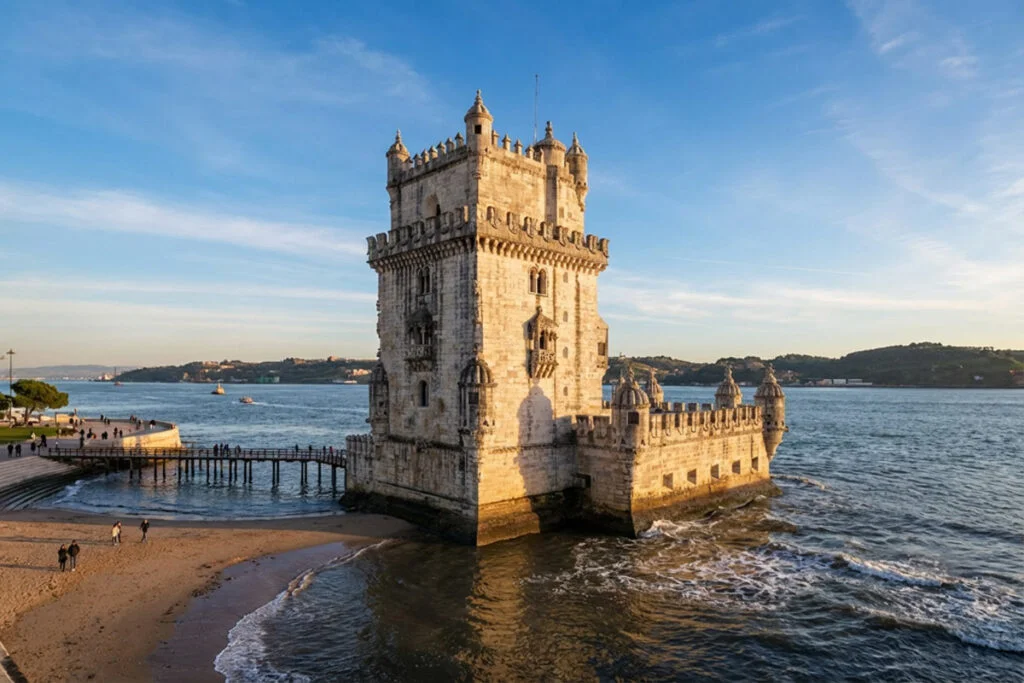
The open-air upper terrace ringed by cannon positions offers views over the Tagus River toward the river mouth. Seventeen cannons were originally mounted along this level when the fortress was completed in the 1510s.
A Renaissance-influenced arched gallery facing the river, considered one of the most photographed architectural features of the tower for its balustraded arches. Its design contrasts with the fortress's otherwise defensive Manueline stonework.
A carved stone gargoyle on the tower's exterior base, often cited as one of the earliest European sculptural depictions of a rhinoceros. It reflects the exotic animals and goods Portuguese explorers encountered during the Age of Discovery.
The ground-level chamber originally built to store weapons and provisions, later repurposed to hold political prisoners. Flooding from high tides regularly reached this lower level due to its position at the water's edge.
Four corner turrets crown the fortress, each capped with a ribbed dome in Manueline style and used historically for surveillance along the river approach to Lisbon. They give the tower its distinctive silhouette from the Tagus.
You arrive between 09:30 and 10:30, when the queue along the quay is shortest and the low sun still catches the limestone. From the riverside path you cross the short causeway to the bastion, salt air off the Tagus at your back. Your timed ticket, priced at 15 EUR, gets you past the entrance and onto the lower artillery platform, where you count the gun embrasures set into the thick walls and lean over the parapet toward the water. Inside, you climb the narrow spiral stair — single-file, worn smooth — pausing at each level as the crowd bottlenecks. You step out onto the Renaissance loggia, run a hand along the stone cables, and find the small rhinoceros carved beneath the watchtower. On the upper terrace you pause at the balustrade, the estuary opening wide below and the 25 de Abril bridge hazy to the west. One of the better-organised belem lisbon tours will time your entry to beat the midday buses, and even a self-guided belem lisbon tour rewards an early slot. You descend the same tight stair, emerge blinking onto the bastion, and walk back across the causeway with the whole riverfront ahead of you.
All the details about your upcoming adventure in one place
The Belem Lisbon riverfront gathers Manueline stonework, Age of Discovery memory, and wide Tagus estuary views into one walkable stretch beside the water. Guided belem lisbon tours introduce the district's maritime heritage and the limestone towers that once watched over departing caravels. Most visitors linger to trace the carved ropes, armillary spheres, and seafaring motifs woven through the architecture.
The Torre de Belém was built not on land but on a small basalt outcrop in the middle of the Tagus, and centuries of shifting river have since left it moored to the northern bank. Commissioned under King Manuel I and completed around 1519, this belem lisbon landmark once guarded the mouth of the harbour from which Portuguese caravels departed for India, Brazil, and the coast of Africa. It is a fortress and a ceremonial gateway at once, the first and last sight of home for sailors of the Age of Discovery. What makes the tower matter today is less its cannon than its carving. The limestone is worked in the Manueline manner, a Portuguese late-Gothic idiom that translated seafaring into ornament: twisted ropes rendered in stone, armillary spheres, crosses of the Order of Christ, and coils of maritime cable running along the balconies. A stone rhinoceros crouches beneath one of the western watchtowers, thought to be among the earliest European sculptural depictions of the animal, modelled on a beast sent to Lisbon in 1515. Few monuments compress an era's imagination so tightly into their surfaces. UNESCO inscribed the tower on its World Heritage list in 1983, pairing it with the great monastery a short walk inland. Together they anchor a riverside district that remains one of the essential Lisbon landmarks, a stretch of quay where the city's outward-facing history is written in stone rather than archive. The structure rises across several levels, from a low bastion bristling with gun embrasures to a slender keep crowned with Moorish-influenced cupolas and loggias. Inside, the rooms are deliberately austere. A vaulted lower chamber once held a garrison and, in later centuries, a dungeon; the Governor's Hall and a small devotional space open onto the Renaissance loggia that faces the water. The proportions were designed to impress arriving diplomats as much as to repel raiders, and the balconies still frame the same broad reach of estuary that fifteenth-century pilots knew. Visitors drawn to belem lisbon tours find that the appeal lies in this doubleness, a working fortification dressed as a jewel. For travellers weighing belem lisbon tickets against a wider itinerary, the tower functions as the symbolic hinge of the whole quarter — small in footprint, outsized in meaning, and unmistakably the emblem of a maritime capital that once measured its reach by the horizon.
A fortress and a ceremonial gateway at once, the first and last sight of home for sailors of the Age of Discovery.
There is no formal dress code for visiting the riverside fortress in Belém, Lisbon, but comfortable footwear is strongly advised because the spiral staircases connecting the tower's terrace, battlements, and upper chambers are narrow and steep. Light clothing suits the exposed riverside setting, where sun and wind off the Tagus can be intense in summer.
Visitors pass through a security check at the entrance on Av. Brasília, and only small bags or daypacks are permitted inside the monument. Large suitcases, backpacks, and bulky items are not allowed past the ticket gate and there is no on-site cloakroom, so travelers arriving straight from Belém, Lisbon accommodations should leave big luggage at their hotel.
Photography without flash is permitted throughout the terrace, battlements, and interior chambers, including the Governor's Room and the vaulted lower gallery. Tripods and monopods are discouraged in peak hours because the stairwells and passageways are narrow and shared with other visitors moving in both directions.
Children of any age can enter the monument, and the compact scale of the fortress, with its cannons, watchtowers, and battlements, tends to appeal to younger visitors. Strollers cannot be taken up the spiral staircases, so parents with infants should plan to carry a child or use a baby carrier for the upper-level rooms and terrace.
The ground-level terrace and bastion of the monument are wheelchair accessible, but the upper floors, battlements, and the iconic loggia are reached only by a tight spiral staircase with no elevator, which limits access for wheelchair users and anyone with mobility difficulty. Visitors with limited mobility can still view the exterior facade and ground floor, which represent much of the site's Manueline stonework.
Eating and drinking are not permitted inside the monument's chambers, staircases, or on the terrace. Visitors should finish snacks or drinks before entering through the security checkpoint, since there is no café or refreshment stand within the fortress itself.
Weekly closure day
Fewer visitors than weekend
Busier toward afternoon
Peak weekend crowds
Peak weekend crowds
Hours
Tue–Sun 09:30–17:30, closed Monday
Address
Av. Brasília, 1400-038 Lisboa, Portugal
Access
Ground floor accessible, upper floors via narrow spiral stairs
Best arrival
09:30–10:30 for shortest queues
Bag policy
Small bags only, no large luggage or backpacks over cabin size
Getting there
Tram 15E or bus 727/728/729 to Belém
Public transport · 20-30 min from downtown · Around 1.80-3.35 EUR per tram/bus fare
Take tram 15E from central Lisbon (Praça da Figueira or Cais do Sodré) toward Belém, or bus 728 or 729 to the Belém stop, then walk about 5 minutes to the riverfront.
Car · 20-25 min from downtown · Parking typically 1-2 EUR/hour
Drive west along Avenida da Índia toward Belém; paid parking is available near the Centro Cultural de Belém and along Av. Brasília, though spaces fill quickly on weekends.
Walk · 10-15 min from Jerónimos Monastery · Free
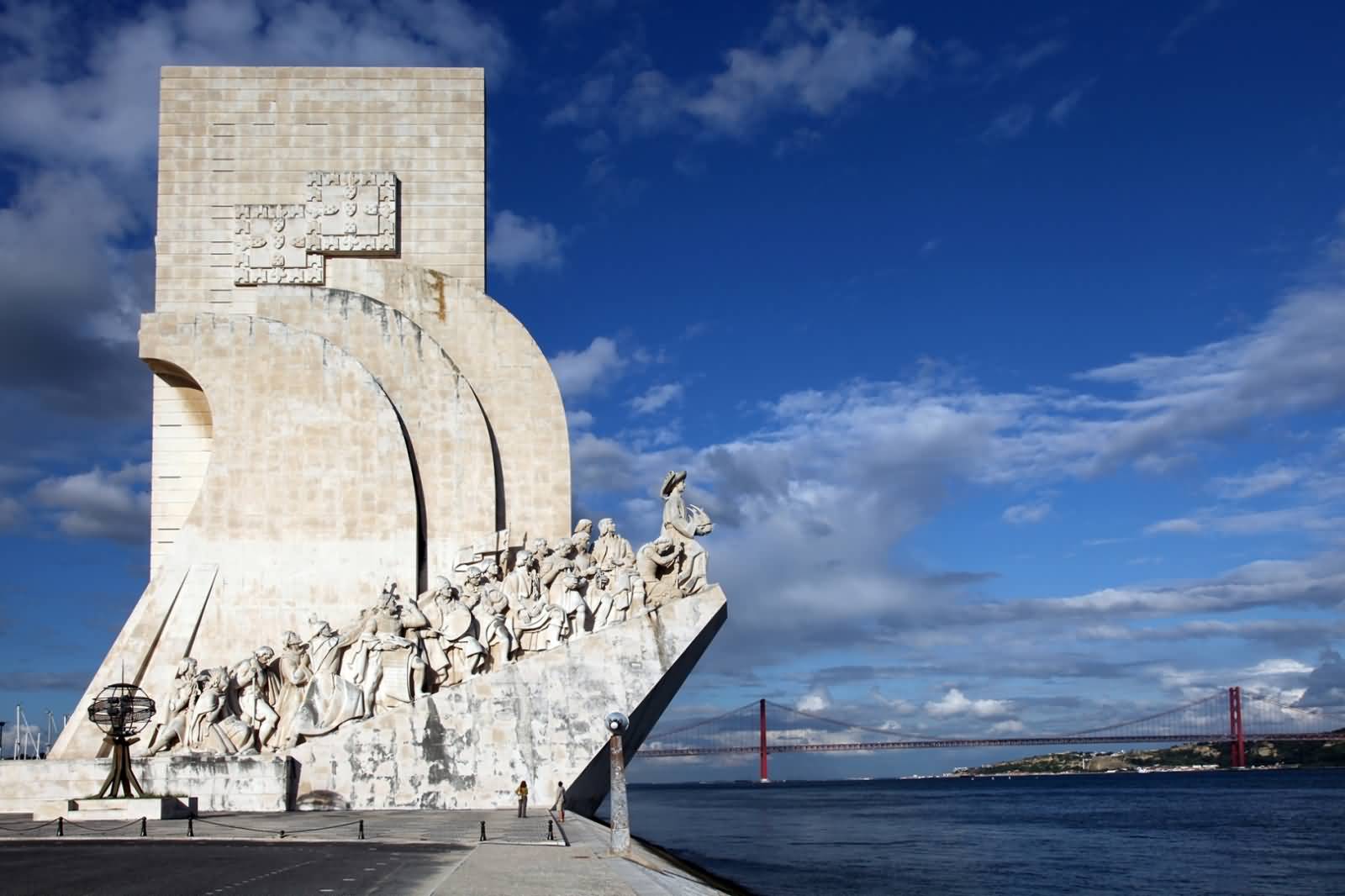
From the Jerónimos Monastery area, it is a flat riverside walk west along Av. Brasília past the Padrão dos Descobrimentos.
Taxi · 15-20 min from downtown · Around 10-15 EUR
Taxis and ride-hailing apps run directly to the Av. Brasília entrance from most central Lisbon neighborhoods.
Timed-entry tickets can typically be cancelled or rescheduled up to 24 hours before the reserved entry slot for a full refund of the 15 EUR standard adult ticket. No-shows and late cancellations are generally non-refundable, so confirm the exact terms shown at checkout when booking.
Recommended time
45-60 minutes
That window covers the full climb through the tower's levels via the single 93-step spiral staircase, which alternates up and down traffic and forces a slow, one-way shuffle rather than a browse-at-your-own-pace visit. A belem lisbon visit built around the 09:30 opening lets you reach the terrace before tour groups stack up on the stairs, often keeping the wait under 15 minutes. Arrive after 11:00 and the same 45-60 minute visit can stretch closer to 90, since capacity limits mean the queue backs up outside as much as the staircase does inside.
Crowd levels through the day
Weather · crowds · average price — dots go green to amber to red as each metric rises.
March through May brings mild temperatures around 15-20°C and thinner crowds than summer, making it a comfortable season to explore Belém, Lisbon on foot along the riverfront.
June through August is peak season with temperatures often above 28°C and the heaviest tourist volume of the year, so early or late slots are noticeably more comfortable.
September through November offers warm days near 20-24°C and gradually thinning crowds after the August peak, making it one of the more pleasant windows to visit.
December through February is the quietest season, with cooler temperatures around 10-15°C and occasional rain, but far shorter waits at the entrance.
Reserve the 15 EUR standard adult ticket in advance online to lock in an entry window and skip the ticket-office line at the gate.
The open terrace over the Tagus River can be windy year-round, so a light jacket helps even on warm days.
The spiral staircases are steep and narrow with two-way traffic, so allow extra time when climbing during busy periods.
The monastery is a short walk away, making it easy to visit both Belém, Lisbon landmarks in one outing.
The tower sits at the river's edge, and the stone base can be slippery near the waterline after rain.
Ticket counters and nearby kiosks generally accept card payment, reducing the need for cash on site.
The arched riverside loggia near the exit offers one of the calmer spots to pause before leaving.
Av. Brasília, 1400-038 Lisboa, Portugal
Ticket gate and security checkpoint
Get directionsAv. Brasília, 1400-038 Lisboa
Riverside monument 5 min walk east, common meeting spot for tours
Get directionsIn 1514, King Manuel I commissioned a fortress to guard the mouth of the Tagus. Construction ran until 1519. The architect was Francisco de Arruda, who had worked on Portuguese strongholds in North Africa. That Moorish training shows in the tower's ribbed cupolas and horseshoe detailing. The builders used lioz limestone, much of it leftover stone from the nearby Jerónimos works. The result reads as both bastion and ceremonial gateway, a fitting emblem for the belem lisbon waterfront during the Age of Discoveries. The tower was armoured for war. Its lower bulwark held sixteen gun embrasures aimed across the river, part of a crossfire system meant to trap enemy ships. Manueline carving softened the martial frame: twisted rope motifs, armillary spheres, and a stone rhinoceros beneath a western sentry box, thought to be Europe's earliest sculpted depiction of the animal. Caravels bound for India and Brazil passed beneath these walls, and returning fleets saluted them. Many visitors on belem lisbon tours still trace this dual identity of weapon and monument. Military purpose faded. By the late sixteenth century, under Spanish rule after 1580, the tower's dungeons served as a political prison, and prisoners were held in the damp lower chambers for centuries. Later it worked as a customs post controlling river traffic, and in the nineteenth century it carried a lighthouse and a telegraph station. The 1755 earthquake reshaped the Tagus shoreline; silting gradually shifted the tower closer to the bank it once stood well offshore from. Restoration in the 1840s, under a romantic-nationalist impulse, stripped later additions and reasserted the Manueline character. UNESCO inscribed the structure, alongside the Jerónimos Monastery, on the World Heritage list in 1983, recognising it as a landmark of the maritime expansion that carried Portuguese ships across the globe. Today the fortress stands as one of the defining belem lisbon landmarks, its four storeys and rooftop terrace open to the public. Those planning a belem lisbon tour will find each level tells part of the story, from the vaulted artillery deck to the governor's hall. The monument sits at Av. Brasília, and belem lisbon tickets grant timed entry to a building that survived war, prison, flood, and neglect to become protected heritage.
King Manuel I commissioned the river fortress and construction began under Francisco de Arruda.
Building work concluded, completing the Manueline tower in lioz limestone.
Under Spanish Habsburg rule the lower chambers were turned into a political prison.
The Lisbon earthquake reshaped the Tagus shoreline around the tower.
Romantic-era restoration removed later additions and revived the Manueline design.
UNESCO inscribed the tower and Jerónimos Monastery as a World Heritage Site.
The free exterior walkway along the Tagus on the tower's northwest side gives an unobstructed, low-crowd angle for a straight-on shot of the tower with the water in the foreground. Stand close to the stone edge and shoot at water level to lengthen the reflection. No ticket or timed entry is needed for this stretch.
At low tide, exposed mudflats just north of the tower create a mirror-like surface that doubles the Manueline silhouette in a wide-angle frame. Crouch near the wet sand rather than the paved path for the strongest symmetry. Check tide times in advance since the flats vanish at high water.
On the tower's second floor, the arcaded loggia facing the Tagus houses the statue of Nossa Senhora do Bom Sucesso framed by seven Italian-style arches, a favored detail shot for anyone photographing landmarks on a belem lisbon tower visit. Access is included with the paid interior ticket and the space is narrow, so shoot between arches rather than blocking the walkway.
The open-air terrace at the top of the tower looks south across the river toward the 25 de Abril Bridge and the Cristo Rei statue on the far bank. It requires the paid ticket and a climb up the narrow spiral stair, and space at the rail is tight, so patience is needed for a clear frame.
Down at the bastion level, the six turret-capped bartizans with their ribbed cupolas make a striking foreground against the open river, and this angle works well for anyone comparing belem lisbon tours that include close-up architectural detail. Walk the perimeter of the terrace to line up a turret against the water without other visitors in frame.
The short access bridge leading to the tower's entrance offers a straight-on view of the south facade with its Manueline windows and the royal coat of arms, a classic composition used on most belem lisbon tickets and brochures. It gets congested quickly after opening, so a few extra steps back onto the garden path clear the frame of queuing visitors.
There is no dining inside the tower itself, but Belem Lisbon rewards a short walk with some of the city's best-known food stops, from the original custard tart bakery to riverside terraces along the Tagus promenade.
The original home of the pastel de nata since 1837. Queues for takeaway snake outside, so sit in the tiled back rooms instead and order tarts warm with cinnamon and powdered sugar on top.
Inside the Champalimaud Center, with a terrace facing the tower and the water. Good for a proper sit-down lunch of modern European dishes after a belem lisbon tour, with sharing plates of bread, cheese, and tuna pâté.
A traditional Portuguese spot on Av. Brasília known for grilled fish and petiscos. Prices run higher than a typical tasca, but the river views justify a slower, sit-down meal.
Small kiosks and trucks like the oyster-and-wine cart dot the waterfront path, useful for a quick coffee, juice, or snack without straying from the river walk.
Built over the water between the Discoveries Monument and the tower, with a terrace for light meals and river views, good for coffee or a relaxed lunch after visiting the landmarks.
Real experiences from real travelers
We walked out to the tower just before sunset and the limestone turned this soft honey color against the Tagus. There were plenty of people but the riverside felt open and breezy. Booking one of the belem lisbon tours ahead meant we skipped a long wait at the entrance.
The carved rope motifs and little stone sentry boxes are worth studying up close. Standing on the terrace you get wide views down the river toward the 25 de Abril Bridge. It captures the whole Age of Discovery story of belem lisbon in one small fortress.
The tower itself is smaller inside than I expected, with tight spiral stairs, so give yourself patience on busy afternoons. The exterior and the waterfront setting are the real draw. Grabbing skip-the-line belem entry saved us a hot half hour in the queue.
We arrived early when the light was flat and cool and the crowds were thin. The bastion overlooking the water is the kind of place you want to linger. A belem lisbon tour guide explained how ships once launched from right here toward the Atlantic.
Strolling the promenade from the Discoveries monument to the tower in belem lisbon at golden hour was the highlight of our Lisbon trip. Warm wind off the river, gulls overhead, and that ornate stone glowing. We stayed until the streetlamps came on.
This is one of those Lisbon landmarks that photographs well from every angle, especially from the little causeway at low tide. The Manueline stonework rewards a slow look. Our belem lisbon tickets included the nearby monument which made the visit feel complete.
Riding the tram out west and seeing the fortress appear on the river was a lovely moment even in cooler weather. The interior is modest but the rooftop terrace views over the Tagus estuary are lovely. Consider a belem lisbon tour if you want the history rather than just the photo.
Up close the balconies look like carved lace, and the small rhinoceros gargoyle is a fun detail to hunt for. Sunset turned everything amber and the river went silver. Easily one of the most memorable belem lisbon landmarks we saw.
We came mid-afternoon and the Atlantic breeze made the summer heat bearable right on the promenade. Watching sailboats drift past the old fortress felt timeless. The belem lisbon tours we joined kept the group small and unhurried.
Don't expect a huge castle, it's an intimate defensive tower, but the setting on the Tagus is what makes it special. The upper terrace gets windy so hold onto hats. A guided belem lisbon tour helped the maritime history click into place.
Everything you need to know for your journey
The monument is open Tuesday through Sunday from 09:30 to 17:30 and is closed on Mondays.
A standard adult ticket for Belém Lisbon costs 15 EUR with timed entry.
The best arrival window is 09:30 to 10:30, right at opening, before midday crowds build up.
Only small bags or daypacks are allowed inside; large suitcases and backpacks must be left behind since there is no on-site cloakroom.
Yes, photography without flash is permitted throughout the terrace and interior chambers.
Comfortable footwear is recommended since the spiral staircases inside are narrow and steep, and light layers suit the riverside wind.
Eating and drinking are not permitted inside the monument, so finish any snacks or drinks before the security checkpoint.
Tram 15E or bus 727, 728, or 729 run from central Lisbon to the Belém stop, a short walk from the entrance on Av. Brasília.
The ground floor and terrace are wheelchair accessible, but the upper floors are reached only by a narrow spiral staircase with no elevator or stroller access.
Yes, children of all ages can visit, though strollers cannot be taken up the interior stairs.
Tickets can typically be cancelled or rescheduled up to 24 hours before the entry slot for a full refund of the 15 EUR fee.
Jerónimos Monastery, the Padrão dos Descobrimentos, and the MAAT museum are all within a short walk and pair well with a Belém Lisbon itinerary.
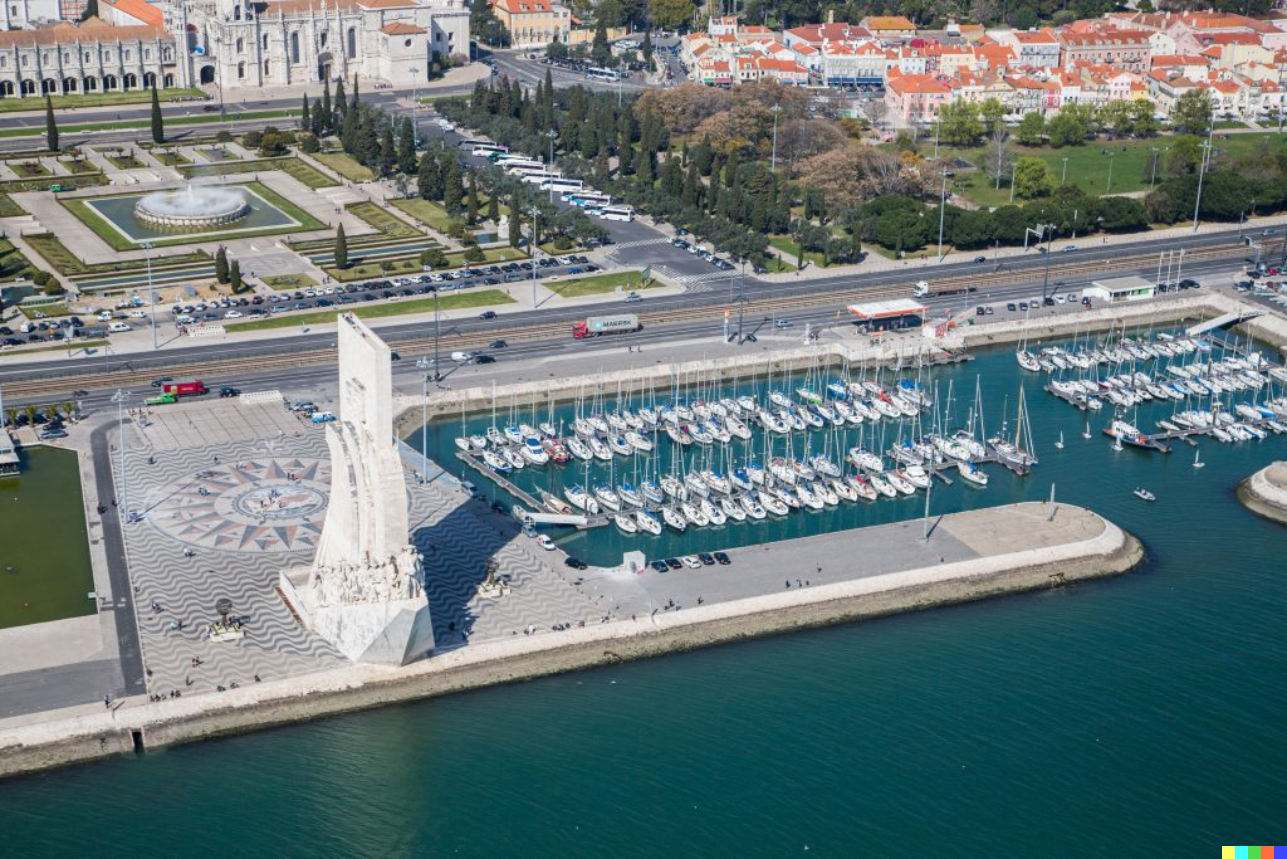
A riverside monument shaped like a ship's prow, built in 1960 to honor the Portuguese Age of Discovery navigators.
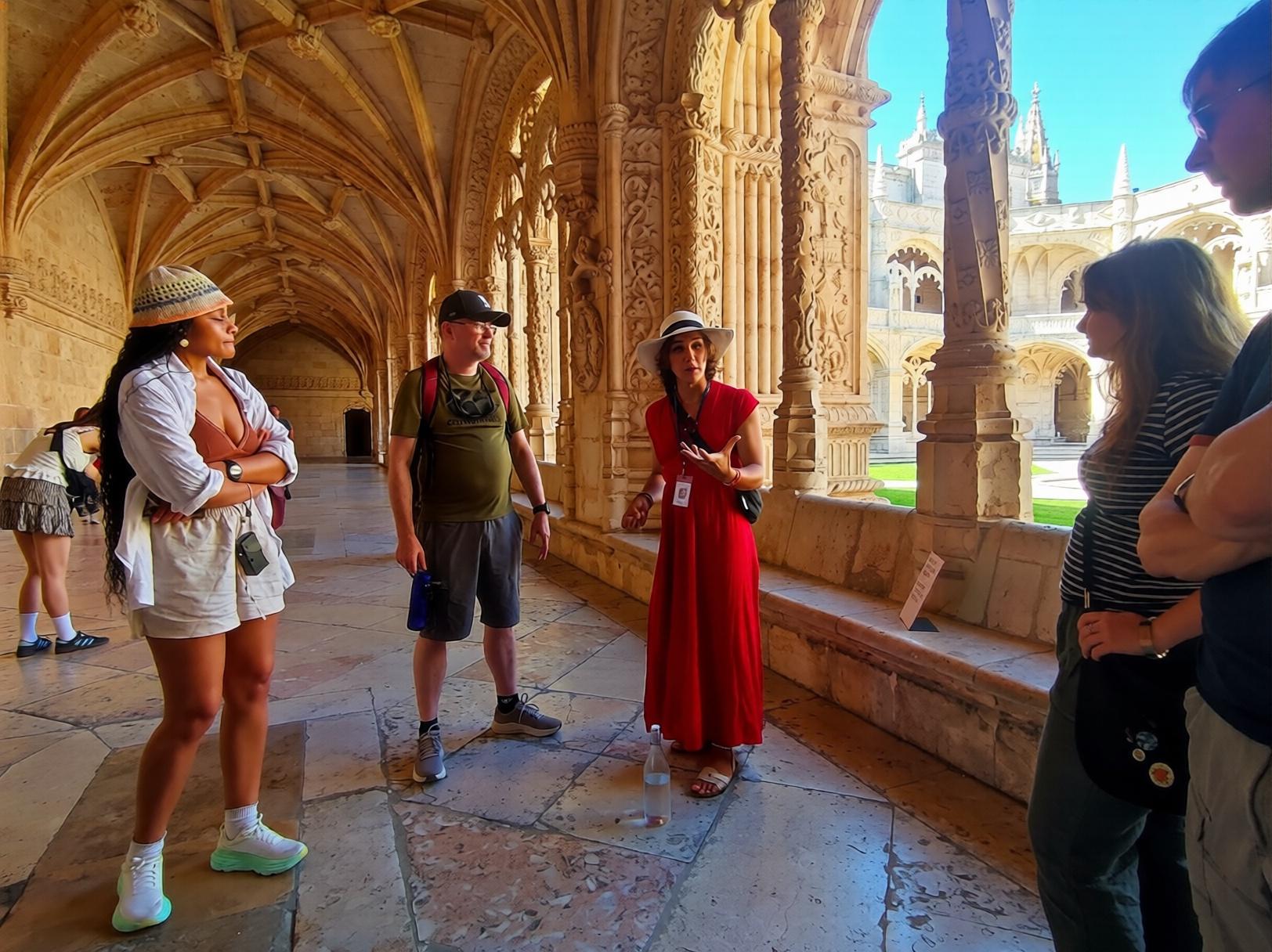
A large Manueline-style monastery founded in 1501, one of Lisbon's most significant religious and architectural sites.
A riverside museum of art, architecture, and technology in a distinctive curved contemporary building on the Tagus.
A large cultural complex hosting exhibitions, concerts, and a design museum near the riverfront.
A formal garden with a central fountain facing Jerónimos Monastery, popular for a short stroll.
A museum housing an extensive collection of historic royal carriages dating back centuries.
A riverside hotel with Tagus views, located directly along the Belém waterfront.
A design-focused hotel near the monastery with a courtyard and modern rooms.
A quieter riverside neighborhood with a range of guesthouses and apartments near the monuments.
A straightforward hotel option a short walk from the Belém riverfront attractions.
Join thousands of happy travelers who have discovered this incredible experience
Book Your Experience Now