3 hr
Lisbon Oceanarium: General Admission Ticket
- Entry ticket
- Mobile voucher
- Valid same day

Lisbon Oceanarium Tickets — Late-Afternoon Entry to the Global Ocean Tank
Five million litres hold their breath, four oceans meet at dusk.
Compare fares, pick the fit — all bookings are mobile-voucher and eligible for free cancellation where shown.
3 hr
2 hr
3 hr
Choosing between lisbon oceanarium tickets comes down to how much behind-the-scenes access you want beyond the main exhibition halls. Standard entry covers the central tank and all permanent zones, while the guided tour, feeding experience, and cable car combo each add a specific extra beyond that 25 EUR baseline.
|
Top pick Standard Entry Self-guided access |
Guided Tour Licensed guide | Feeding & Training Tour Behind-the-scenes access | |
|---|---|---|---|
| Access level | All permanent exhibitions | All permanent exhibitions | Technical areas plus exhibitions |
| Guided or self-paced | Self-paced | Guided, scheduled start time | Guided, scheduled start time |
| Extra experience included | — | Expert commentary on habitats | Watch keepers feed otters, sharks, rays |
| Typical add-on cost over standard entry | — | About 10-12 EUR | About 10-15 EUR |
| Best for | First-timers, couples, solo visitors | Visitors wanting context and detail | Families and marine-life enthusiasts |
| See tickets & prices |
Verdict: First-timers and anyone touring Lisbon landmarks on a schedule do best with standard entry, while the feeding and training tour suits those wanting the deepest look behind the scenes.
Worth it for most, especially late afternoon
At 25 EUR standard entry, lisbon oceanarium tickets sit at the higher end of Parque das Nacoes attractions, but the value math holds up. You are paying for Europe's second-largest aquarium, built around one central million-litre tank ringed by four themed marine habitats, plus a permanent exhibit rotation covering sunfish, sea otters, penguins, rays and hundreds of species most European aquariums cannot match. That scale and animal variety is the case a lisbon oceanarium tickets tour makes over cheaper regional options. Arrive in the 16:00-18:30 window and you lock the lowest fare with the thinnest crowds, so the same money buys unhurried viewing rather than shoulder-to-shoulder glass. Compared to booking a marine life visit or skip-the-line aquarium entry elsewhere among Lisbon landmarks, the per-hour value here is strong. It pays off best for first-timers, families and anyone drawn to the Oceanario's central tank centrepiece.
Bottom line: Book lisbon oceanarium tickets tickets for the 16:00-18:30 slot and the 25 EUR fare clearly earns its keep.
Hand-picked experiences loved by thousands of travelers
2–3 hours
Free Cancellation
Hop aboard a RIB boat to spot dolphins, seabirds & coastal wildlife with expert biologists guiding the way.
24, 48, or 72 hours (choose your option)
One card, unlimited rides, and free entry to 52 attractions — discover Lisbon your way.
1 hour 40 minutes
Free Cancellation
Drift along the Tagus for 90 minutes, sipping a drink as Lisbon's icons glide past.
Enter via Esplanada Dom Carlos I and pass through bag screening at the entrance pavilion
Walk the four regional zones — Temperate Pacific, Antarctic, Temperate Atlantic, Tropical Indian — surrounding the central tank
View the large open-ocean tank from multiple angles across both floors
Descend to see the underwater perspective of each habitat and the otter enclosure
Walk through the immersive upper-floor exhibit linking cosmos and ocean depths
Browse ocean-themed souvenirs before leaving through the entrance pavilion
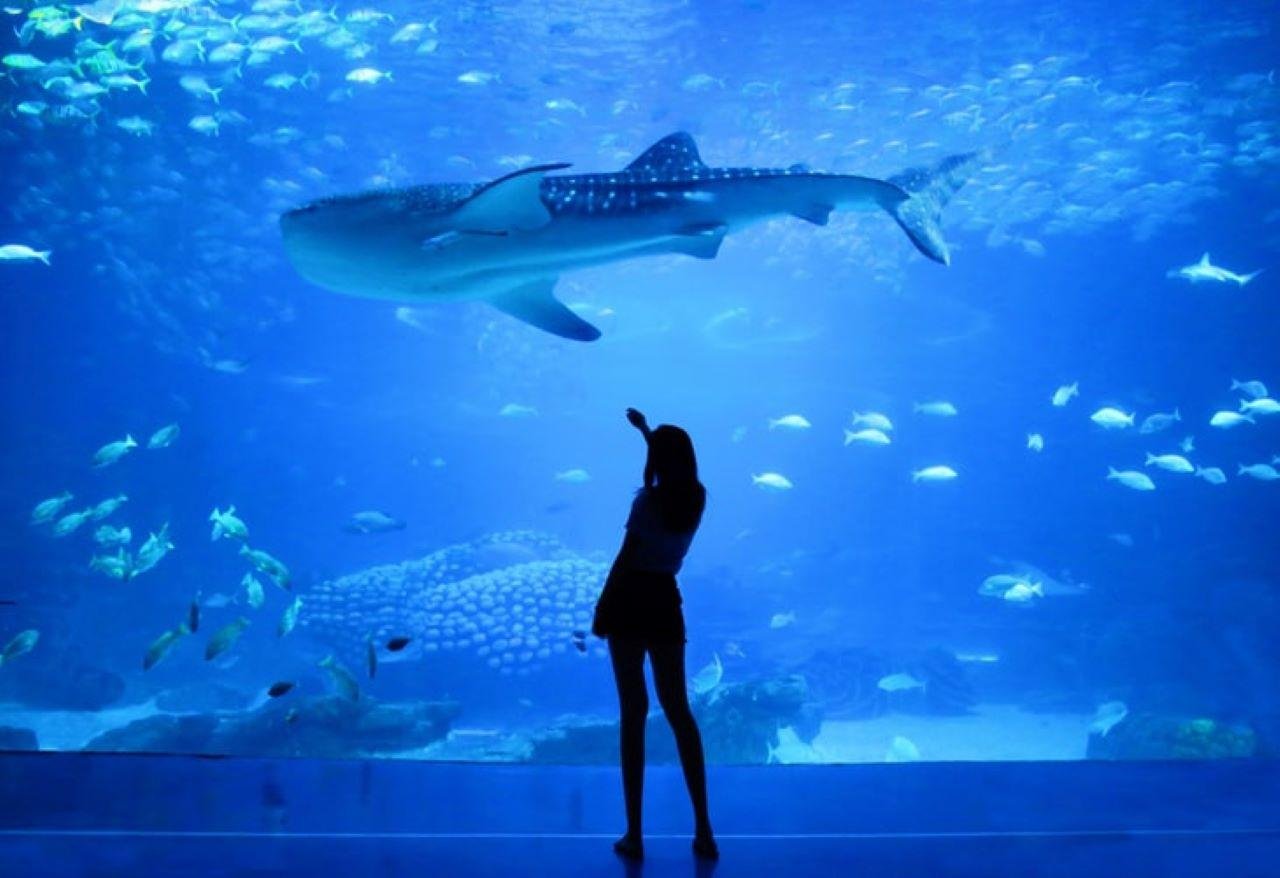
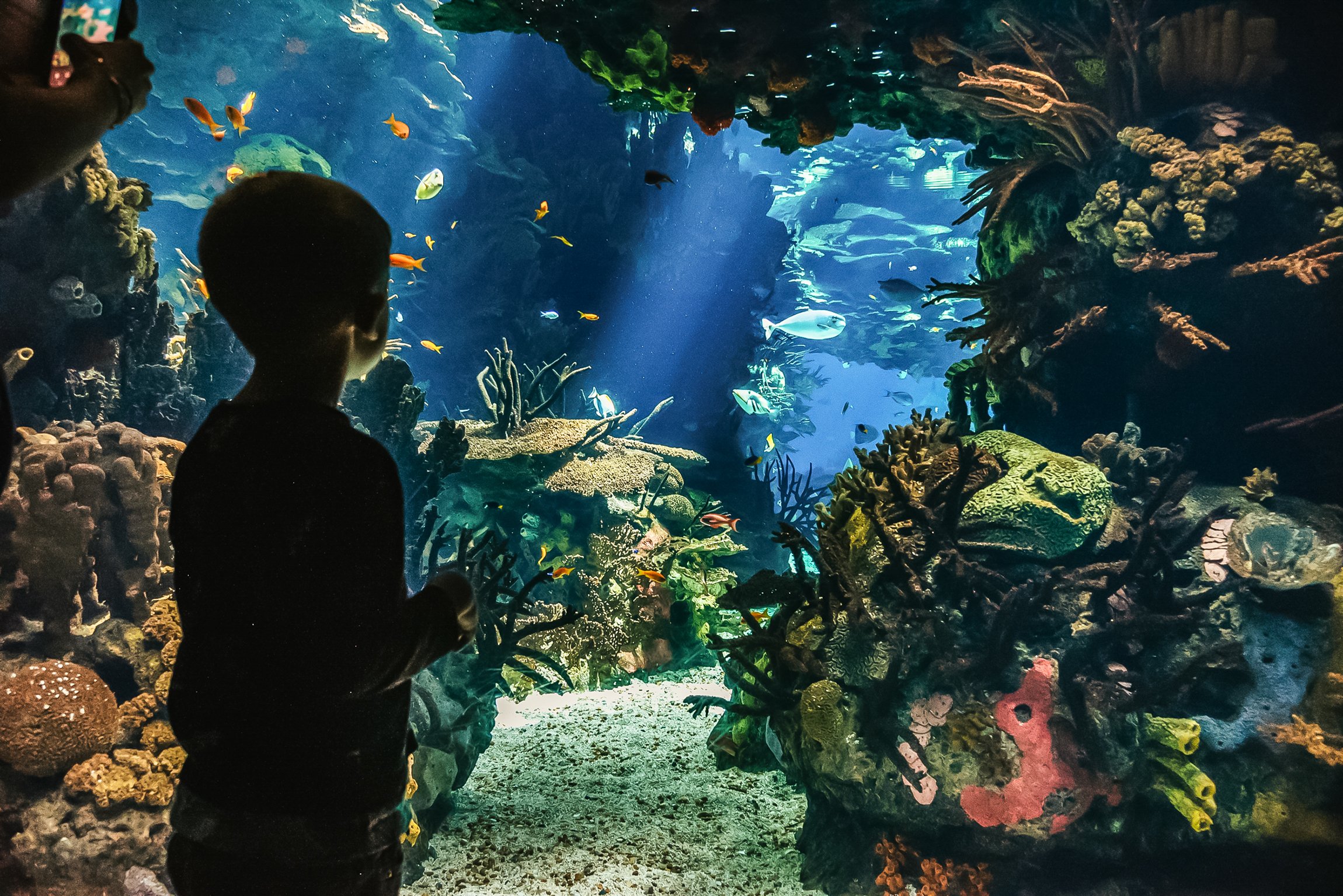
A five-million-liter tank at the heart of the building, visible from both exhibition floors and stocked with open-ocean species swimming together in a single shared habitat.
One of four regional zones ringing the central tank, recreating a kelp-forest coastline with cold-water species native to the northern Pacific.
A chilled gallery replicating a sub-Antarctic coastline, home to species adapted to near-freezing water temperatures within the otherwise temperate building.
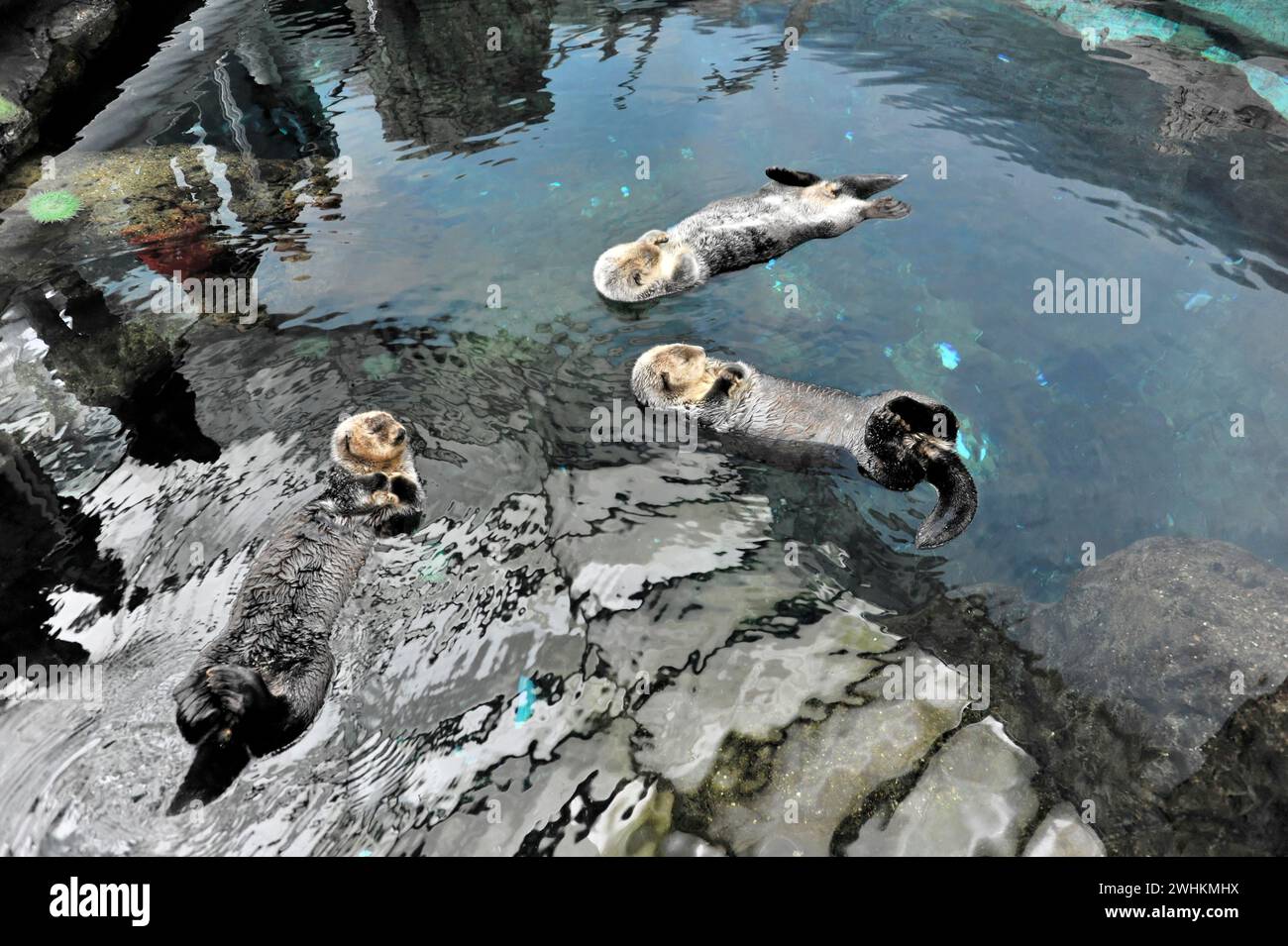
A partially open-air pool on the lower level where sea otters are visible both above and below the waterline, one of the most photographed stops in the building.
A warm-water zone themed around a coral reef ecosystem, featuring the colorful reef fish species associated with the Indian Ocean.
An immersive upper-floor experience added to the permanent exhibition, connecting themes of the cosmos to the ocean's depths from plankton to whales.
You cross the short footbridge over the Doca dos Olivais and step into a dim, cool interior that mutes the summer light outside. You climb to the upper level first, where the central tank opens beside you like a window onto open water, and you pause as a shoal wheels past the glass. You follow the ramp outward into the North Atlantic habitat, then the Antarctic, watching puffins dart and penguins shuffle along their rocks. You descend a level. Now the same central tank rises above you, and the water you looked across is suddenly water you look up into. Sharks pass overhead. A sunfish drifts by, vast and slow. You settle onto one of the low benches set into the darkness and let the tank fill your whole field of view for a few minutes. You move through the tropical Indian Ocean corridor, past coral and lionfish, then into the Amano freshwater gallery, where planted tanks glow green against black walls. Arriving in the calmer late-afternoon window, you find the corridors thinner and the benches emptier. When you finally step back onto the bridge, the estuary light has softened toward evening. Booking lisbon oceanarium tickets in advance means you spend this hour watching the water rather than queuing beside the dock.
All the details about your upcoming adventure in one place
Set on the Tagus estuary in the Parque das Nações district, the Oceanário de Lisboa centres on a vast Global Ocean tank surrounded by four themed marine habitats. Lisbon oceanarium tickets grant entry to permanent and temporary exhibits, where you can watch sunfish, sea otters, and Magellanic penguins across the twin-level walkways. Many visitors pair their lisbon oceanarium tickets tours with a ride on the Cable Car overlooking the waterfront pavilions.
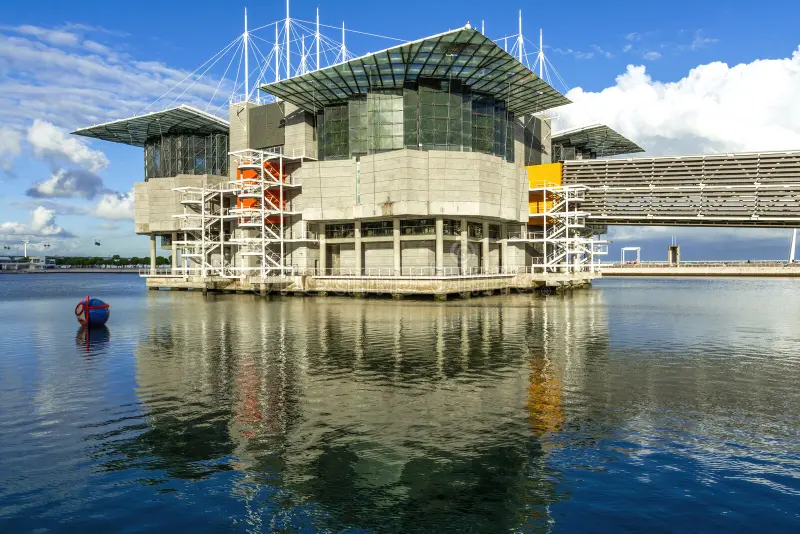
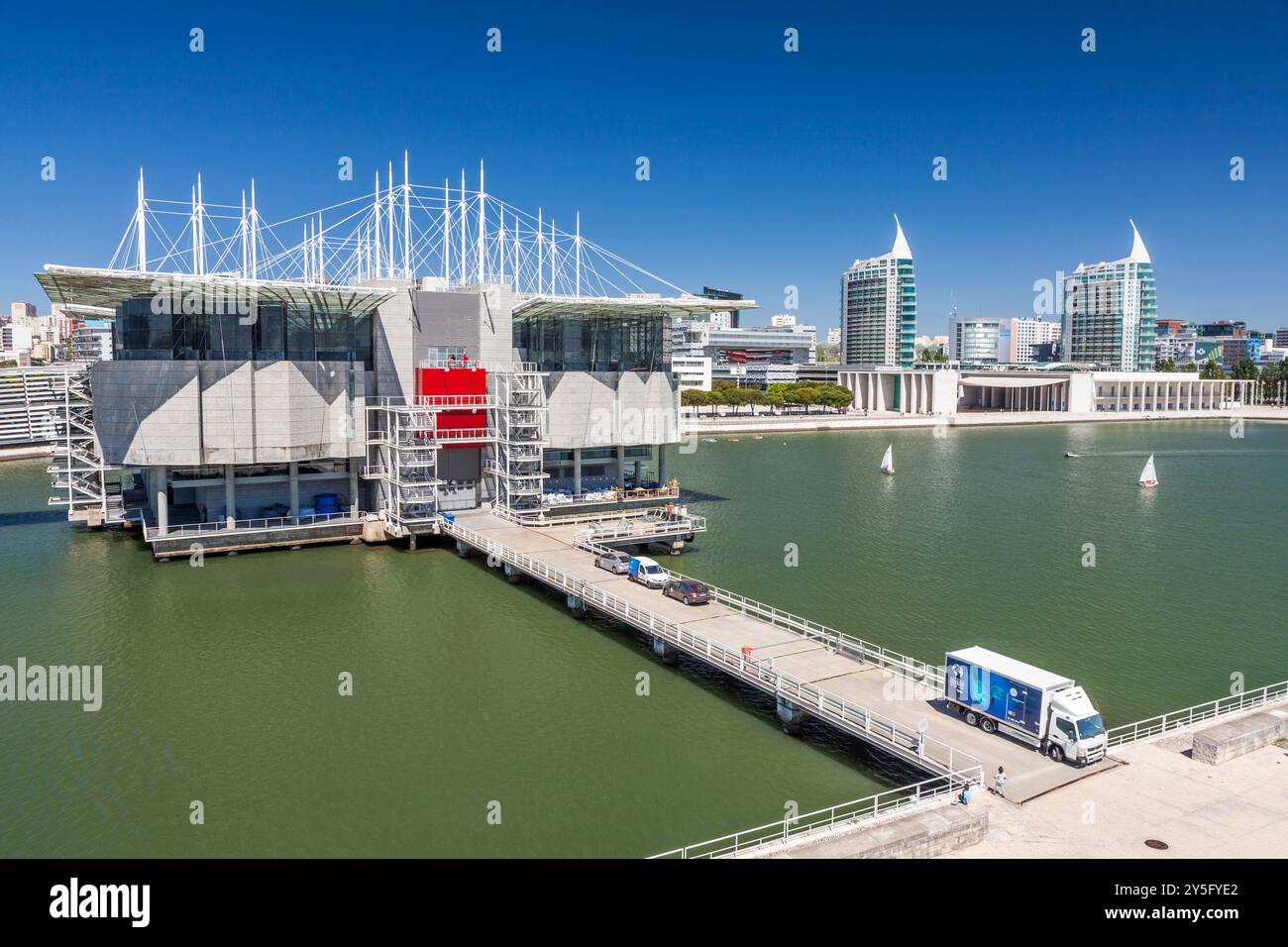
The central tank of the Oceanário de Lisboa holds five million litres of seawater and is deep enough to submerge a four-storey building. Around this single volume the entire building is arranged, a design conceived by American architect Peter Chermayeff for Expo '98, the world's fair that transformed a derelict eastern riverfront into Parque das Nações. When the exhibition closed, the pavilion remained, and it has drawn visitors to the Doca dos Olivais ever since. Anyone weighing lisbon oceanarium tickets is really weighing entry to one of the largest indoor aquariums in Europe. The architecture rewards the concept. From the outside the structure appears to float on the Tagus estuary, reached by a footbridge across a small dock, its pale volume mirrored in the water below. Inside, the layout is deceptively simple: a vast open ocean tank at the core, ringed by four coastal habitats representing the North Atlantic, the Antarctic, the temperate Pacific and the tropical Indian Ocean. Visitors circle the central tank twice, once on an upper level and once below, so the same body of water is read first as surface and then as depth. Sea otters, puffins, Magellanic penguins and a resident sunfish occupy the peripheral zones, while sharks, rays and shoals of pelagic fish patrol the middle. Significance here is ecological as much as architectural. The institution has grown into a centre for marine conservation and public education, its exhibits framed around ocean health rather than spectacle alone, and it remains among the most visited cultural sites in Portugal. A permanent installation designed with the late Japanese artist Takashi Amano, one of the largest nature aquariums ever built, extended that ambition toward freshwater ecosystems. For many travellers a Lisbon oceanarium tour becomes the anchor of a full afternoon in Parque das Nações, alongside the cable car and the Vasco da Gama tower. The collection's strength lies in its coherence. Rather than a corridor of isolated tanks, the design insists that four oceans are one continuous system, a single Global Ocean glimpsed from shifting angles. That idea, unusual when the pavilion opened, now feels prescient. Among Lisbon landmarks that survived Expo '98, few have aged so gracefully or held their purpose so clearly. Those comparing lisbon oceanarium tickets tickets across the city's attractions tend to return to this one for its scale, its clarity and its quiet argument that the sea is indivisible.
Four oceans are shown here as one continuous system, a single Global Ocean glimpsed from shifting angles.
There is no formal dress code for the Lisbon Oceanarium, but comfortable, weather-appropriate clothing is recommended since the route moves between warmer upper-level galleries and cooler lower-level tanks. Closed, flat shoes work best because floors near the tanks can be damp and visitors spend most of the visit standing or walking on ramps.
Bags are screened at the entrance on Esplanada Dom Carlos I, and small backpacks or daypacks are permitted inside the exhibition halls. Large suitcases, wheeled luggage, and oversized bags must be left at the cloakroom near the entrance pavilion, as they cannot be carried through the narrow viewing corridors around the central tank.
Personal photography and video without flash are allowed throughout the Lisbon Oceanarium's four habitat zones and the central tank, but flash photography is switched off to avoid disturbing the sharks, rays, and other marine life. Tripods, monopods, and selfie sticks are discouraged in the narrower corridors due to crowd flow around the acrylic viewing panels.
Strollers are permitted throughout the exhibition route, and children under 3 enter free of charge alongside a paying adult. Baby-changing facilities are located near the main restrooms on the entrance level.
The building is fully wheelchair accessible with ramps and elevators connecting the upper and lower exhibition floors, in line with European accessibility standards. Designated accessible parking is available near the entrance, and wheelchairs can be borrowed on site at no extra charge, subject to availability.
Food and drink are not permitted inside the exhibition galleries or near the tanks, as they can affect the climate-controlled environment maintained for the marine species. Sealed water bottles are generally tolerated, but any eating must wait until visitors reach the café or picnic areas outside the exhibit halls.
Last entry 19:00
Quietest weekday morning
Busier from midday
Weekend crowds, book ahead
Family groups peak midday
Hours today
10:00–20:00, last entry 19:00
Address
Esplanada Dom Carlos I, Doca dos Olivais, Parque das Nações, 1990-005 Lisboa, Portugal
Access
Ramps and elevators throughout, step-free from Oriente station
Best arrival
16:00–18:30 for lowest fare and smaller crowds
Bag policy
Small bags allowed, large luggage and suitcases not permitted inside
Public transport · 10 min walk from Oriente · Metro fare from €1.65
Take the Red Line metro to Oriente station, then walk about 10 minutes through Vasco da Gama shopping centre toward the river.
Car · 20–30 min from central Lisbon · From about €1/hour
Drive toward Parque das Nações and use Parque do Oceanário, the closest car park with roughly 274 spaces just steps from the entrance.
Walk · 10–15 min from Oriente · Free
From Oriente station or the Parque das Nações waterfront, it is a flat, signposted walk along the Tagus riverside promenade.
Taxi · 15–20 min from central Lisbon · Around €10–15
Taxis and ride-hailing apps can drop off directly at Esplanada Dom Carlos I near the entrance pavilion.
Lisbon Oceanarium tickets booked for a fixed time slot are typically non-refundable once the date has passed, but most official and partner bookings allow free cancellation up to 24 hours before the visit date for a full refund. Tickets purchased at the standard 25 EUR adult rate through the official site follow the same 24-hour window; check the confirmation email for the exact cutoff tied to your specific booking.
Recommended time
2-3 hours
Most visitors need 2-3 hours to move through the central tank and the four habitat zones without rushing, and searching lisbon oceanarium tickets is worth doing ahead so you can lock in a late-afternoon slot. Add 30-45 minutes if traveling with young kids who linger at touch pools, or trim toward 90 minutes if you're doing a focused loop. Midday queues can stretch long on peak days, so arriving right at open or in the 16:00-18:30 window keeps both the entry line and the tanks themselves walkable rather than shoulder-to-shoulder — a smarter approach than any generic skip-the-line oceanarium tour that ignores timing altogether.
Crowd levels through the day
Weather · crowds · average price — dots go green to amber to red as each metric rises.
Mild temperatures around 15–20°C and thinner crowds outside the June–August peak. School trips can add midweek volume in May, so weekends are often calmer.
Peak season with the heaviest attendance, especially July and August school holidays. Arriving in the late afternoon helps avoid the midday surge typical of this period.
Crowds thin noticeably after September, with comfortable temperatures around 15–22°C making it a quieter alternative to summer.
The lowest attendance of the year outside the December holiday closures, with cooler 8–15°C weather outside but a stable indoor climate throughout the exhibits.
The Oceanarium runs timed-entry slots, and pre-booking online avoids waiting in the queue outside the entrance pavilion, especially in July and August.
The sea otter viewing area on the lower floor tends to draw the biggest crowds, so circle back toward the end of the visit if the first pass is packed.
Telecabine Lisboa departs a short walk from the Oceanarium entrance and offers a different river-level view of the Parque das Nações waterfront.
This car park sits closest to the entrance among the area's options, making it convenient for visitors arriving by car.
Hours shift on December 24, 25, 31 and January 1, so confirm the schedule before planning a visit near those dates.
The viewing corridors around the central tank get narrow and crowded, so keep bags zipped and phones secured while photographing the marine life.
Esplanada Dom Carlos I, Doca dos Olivais, Parque das Nações, 1990-005 Lisboa
Ticket collection and group meeting point at the entrance pavilion
Get directionsAvenida Dom João II, Parque das Nações
Metro Red Line arrival point, 10-minute walk to the Oceanarium
Get directionsThe Oceanário de Lisboa was born from Expo '98, the world exposition staged in Lisbon along the Tagus estuary. The fair opened on 22 May 1998 under the theme 'The Oceans: A Heritage for the Future,' timed to the United Nations International Year of the Ocean. The oceanarium was conceived as the event's centrepiece, a permanent structure meant to outlive the temporary pavilions of Parque das Nações. That intent held. When most of the exposition was dismantled, the building endured as the district's anchor, and demand for lisbon oceanarium tickets has climbed steadily since. The American architect Peter Chermayeff shaped its central idea. His concept rejected separate, disconnected aquaria in favour of one global ocean. A single vast central tank, holding roughly five million litres, sits at the core, ringed by four coastal habitats representing the Atlantic, Antarctic, Pacific, and Indian oceans. Acrylic panels create a deliberate illusion: the four regional tanks appear to share continuous water with the central basin, though each is physically separate. Visitors booking lisbon oceanarium tickets tours still move through this circular logic today, the same one-ocean narrative Chermayeff drafted in the mid-1990s. Growth followed. In 2011, the studio Campos Costa Arquitectos completed the Sea Building, an adjacent structure linked by a raised walkway across the Doca dos Olivais. It added temporary-exhibition space and expanded capacity without altering Chermayeff's original volume. The addition marked the oceanarium's shift from a single Expo relic into a two-building campus among the wider Parque das Nações landmarks. Anyone weighing a lisbon oceanarium tickets tour now encounters both structures, the 1998 core and its 2011 companion. The building's marine engineering, its life-support systems, and its acrylic viewing walls have been maintained and upgraded across the decades. What survives is remarkable for its coherence. The near-loss of the Expo site to redevelopment never claimed the oceanarium; it remained the reason crowds returned. Purchasing lisbon oceanarium tickets tickets today means entering a design that has outlasted the fair that created it, unchanged in intent since Chermayeff's first sketches.
Peter Chermayeff develops the one-global-ocean design with a single central tank.
The Oceanário opens as the centrepiece of Expo '98 under the theme 'The Oceans: A Heritage for the Future.'
Temporary pavilions are dismantled while the oceanarium endures as the Parque das Nações anchor.
Campos Costa Arquitectos completes the Sea Building, linked by a raised walkway across the Doca dos Olivais.
Life-support systems and acrylic viewing walls are maintained and upgraded across the campus.
The 1998 core and 2011 addition operate together as a two-building marine complex.
Stand on the ramp's mid-level landing for a wide-angle view straight into the 5-million-litre Central Ocean Tank, where rays and sharks cross in open water behind thick acrylic. This is the single best framing spot in the building and rarely empties out, so a brief pause between tour groups helps. Flash is not allowed, so brace against the rail for a steadier handheld shot.
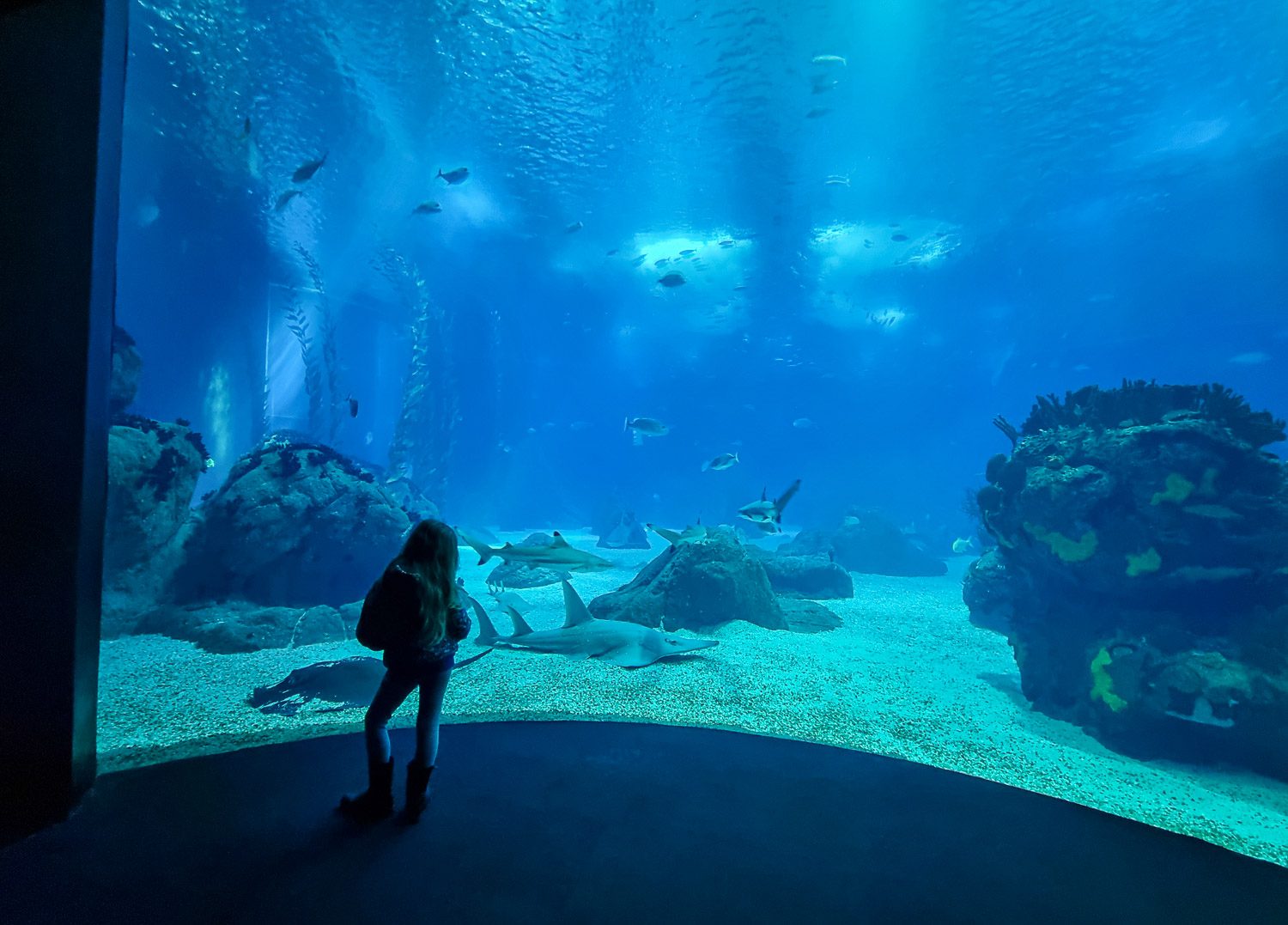
On the lower floor, the corridor runs beneath water line, and shooting up toward the surface catches fish as dark silhouettes against the light filtering down from above. It is a narrow walkway, so photos work best if you step aside to let others pass. This angle also anchors many of the photos people search for when planning lisbon oceanarium tickets, since it shows the aquarium's below-water perspective.
The Pacific zone, home to the sea otters, sits in noticeably dimmer lighting than the Tropical Indian side, which suits close portrait-style shots of visitors against the kelp forest backdrop. Position near the glass rather than the walkway center to avoid reflections from other exhibit lights. Otter feeding times draw a small crowd, so early or late in the visit window is quieter.
From just past the main entrance on the upper floor, the walkway opens onto the first full view of the Central Ocean Tank, giving a strong establishing shot before descending the ramp. It works well for orienting a photo series of the whole visit. Wide shots here also capture the scale of the tank's window against the crowd.
The penguin enclosure's glass front gives a bright, high-contrast shot of King Penguins against rockwork and water, distinct from the darker Pacific corner. Shooting low, near the floor-level glass, gets penguins at eye level. This spot gets busy during feeding demonstrations, so check the board for timing.
Booking lisbon oceanarium tickets with a family in tow works best if you treat the layout as a loop, not a checklist: the upper level circles the four ocean zones before the lower level shows the same tanks from underwater, so little legs cover ground twice.
Toddlers through age 10 tend to engage the longest, drawn in by the central tank's sharks and rays and the smaller viewing windows at kid height around the perimeter tanks.
Start upstairs and move counter-clockwise so the Antarctic zone, with penguins and otters, lands in the middle of the visit rather than the end, giving kids a high-energy stop before fatigue sets in.
Otters and puffins consistently hold attention far longer than the coral or kelp tanks, so budget extra minutes there and gently keep the group moving through quieter sections.
Save the lower-level underwater views of the same otters and penguins as a second look rather than skipping straight past, since revisiting familiar animals from below re-engages kids who are flagging.
If a child fixates on one zone, let them loop back after finishing the circuit instead of doubling back mid-route, which keeps the group moving in one direction and avoids congestion.
The central tank's slow-moving rays and sunfish offer a natural calm-down point between the more stimulating penguin and otter areas.
Zafra Coffee & Bar sits inside the Oceanário itself for a quick bite before or after your visit, while Parque das Nações' riverfront offers proper meals within a short stroll. Booking lisbon oceanarium tickets for the 16:00-18:30 window leaves time for an early dinner along the Tagus without rushing.
On-site café with freshly ground coffee and light lunch options such as sandwiches and pastries. Good for a fast stop between exhibits or right after finishing the visit. Gets busy around midday.
Wood-fired pizzas and a solid wine list in a relaxed riverside setting. Suits an early dinner after an afternoon lisbon oceanarium tickets tour. Reserve ahead on weekends.
Riverside spot with Mediterranean-leaning bowls, salads and grilled dishes, plus Tagus views. Casual enough for a quick post-visit lunch or dinner. Popular at sunset.
Multiple quick-service stalls inside the shopping centre, useful for families wanting fast, varied options. Not fancy but convenient and affordable.
Real experiences from real travelers
We arrived just after opening on a warm June morning and the light through the main tank was calm and blue. Booking lisbon oceanarium tickets online meant we walked straight in past a growing queue. The two-level route around the ocean tank kept our kids quiet for a full hour.
The Oceanário de Lisboa sits right on the water at Parque das Nações and the walk from the metro is easy. A skip-the-line oceanarium entry saved us a good twenty minutes on a busy Saturday. The sunfish in the central tank were far larger than I expected.
Beautiful facility and the kelp forest tank was my favourite quiet corner. We came around noon and it got busy, so I'd grab lisbon oceanarium tickets for an earlier slot next time. The signage in English and Portuguese was clear throughout.
Our daughter watched the sea otters float for ages while afternoon light came through the glass roof. Having our lisbon oceanarium tickets tickets on the phone made the whole thing painless. One of the better Lisbon landmarks we saw on this trip.
Late January and almost empty, which made the temperate galleries feel serene. The Lisbon Oceanarium tour flowed logically from the tropical Indian tank round to the Atlantic. Cool grey light over the Tagus outside added to the mood.
Reservar os bilhetes oceanário Lisboa online foi rápido e evitámos a fila da manhã. O tanque central com a raia gigante impressionou mesmo os adultos. Voltámos ao fim da tarde para ver a luz mudar sobre a água.
A wet November afternoon and this was the ideal indoor escape near the river. The main acrylic window is genuinely huge and the crowds thinned by closing time. Getting lisbon oceanarium tickets ahead meant no fuss at the door.
The swaying kelp tank lit by soft overhead light was the highlight for me. We joined an early lisbon oceanarium tickets tour and had the upper walkway almost to ourselves. Standing at the four-window central tank you lose track of time.
Warm September evening, gentle estuary breeze, and a well-paced loop through the exhibits. This Lisbon aquarium experience kept our two boys engaged from the sharks to the puffins. The digital lisbon oceanarium tickets tours confirmation scanned in seconds.
The building itself, perched over the Doca dos Olivais, is worth the visit alone. Mid-afternoon summer sun made the exterior glass glow against the blue water. We spent about ninety minutes inside and left before the biggest crowds arrived.
Everything you need to know for your journey
The Oceanário de Lisboa opens daily from 10:00 to 20:00, with last entry generally an hour before closing; hours shift slightly around December 24, 25, 31 and January 1.
Yes, the building is fully wheelchair accessible with ramps and elevators connecting both exhibition floors, and designated accessible parking is available near the entrance.
Large suitcases, tripods in crowded corridors, flash photography gear, food and drink, pets other than registered guide dogs, and open umbrellas are among the items not permitted inside.
Personal photography without flash is allowed throughout the exhibits, though flash is switched off to avoid disturbing the marine life and tripods are discouraged in narrow viewing areas.
Arriving between 16:00 and 18:30 typically means the lowest standard fare and smaller crowds compared with the midday peak, particularly in summer.
There is no strict dress code, but comfortable closed shoes and a light layer are recommended given the mix of warmer galleries and cooler tank-side corridors.
Food and drink are not permitted in the exhibition galleries, though a café near the entrance pavilion serves snacks and refreshments after the visit.
The Red Line metro to Oriente station is the easiest route, followed by a roughly 10-minute walk; drivers can use Parque do Oceanário, the car park closest to the entrance.
Yes, children under 3 enter free with a paying adult, and strollers are permitted throughout the route, making it a common stop for Lisbon landmarks itineraries with kids.
Most bookings allow free cancellation up to 24 hours before the visit date, though tickets are generally non-refundable once the scheduled time has passed.
The Vasco da Gama Tower, Telecabine Lisboa cable car, and the Pavilion of Knowledge sit within a short walk and pair well with an Oceanarium visit.
Yes, the Lisboa Card offers a discount on Oceanarium admission along with unlimited public transport across the city.
A 145-metre lattice tower built for Expo 98, offering river views from an observation level near a rooftop restaurant.
A cable car running along the Tagus riverfront through Parque das Nações, connecting the Oceanarium area to the Vasco da Gama Tower.
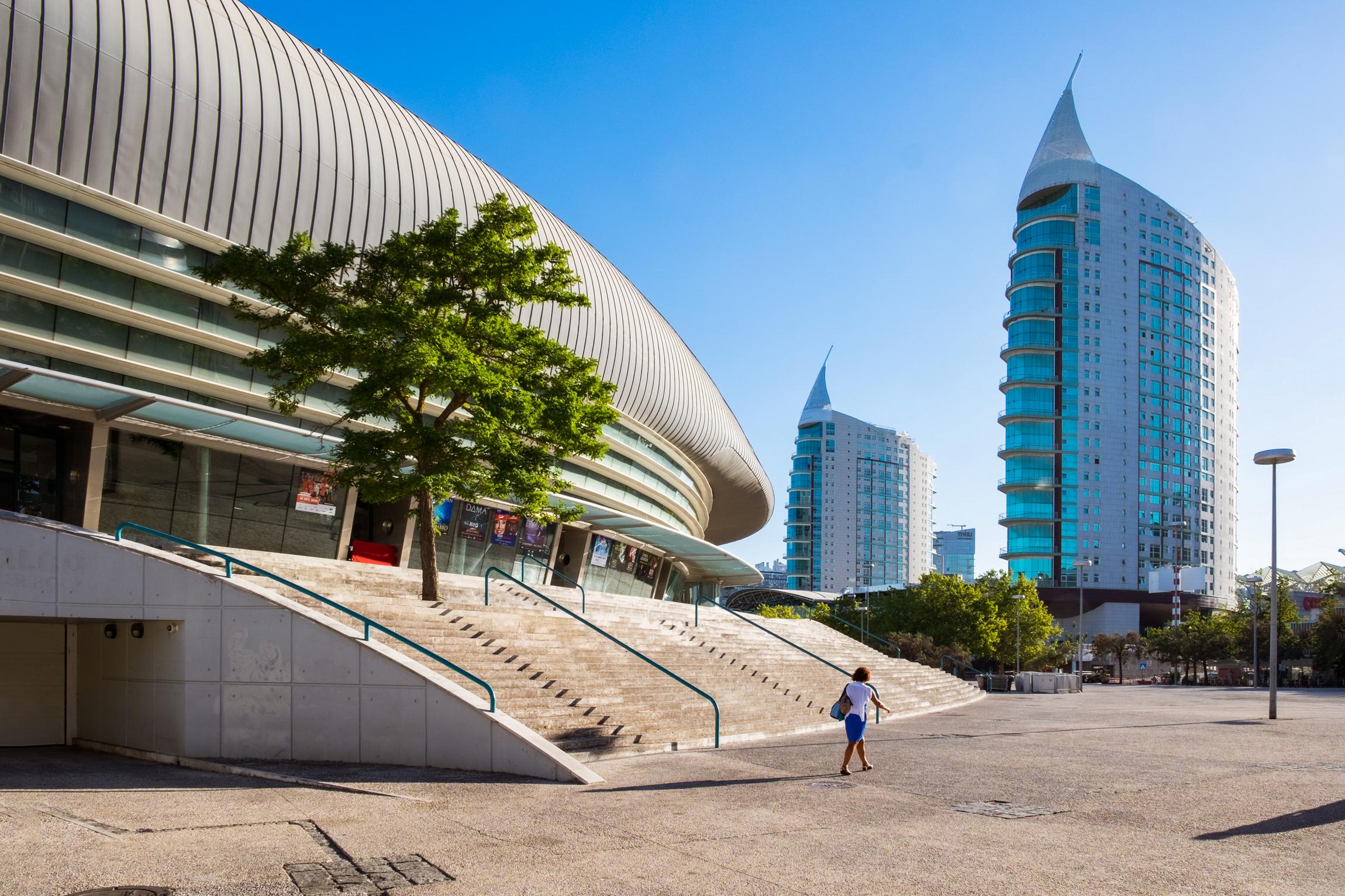
A large indoor arena hosting concerts and sporting events, visible from the riverside promenade near the Oceanarium.
A riverside garden along the Parque das Nações waterfront with themed plantings and open lawns.
An interactive science museum aimed at children, part of the former Expo 98 site.
A high-rise hotel built into the Vasco da Gama Tower complex with river views over Parque das Nações.
A modern hotel close to Oriente station with easy metro access to the Oceanarium area.
The riverside district itself, with several mid-range and business hotels within walking distance of the entrance.
A budget-oriented hotel near Oriente station serving as an economical base for a visit.
Join thousands of happy travelers who have discovered this incredible experience
Book Your Experience Now