Closed · Closed

Fado Lisbon

Fado Lisbon — Museu do Fado, Alfama Entry & Guided Visits

A voice rises in Alfama, a city listens close.

159K+ travelers chose this
Free Cancellation
Right now: Light — weekday morning Reopens Tuesday at 10:00, arrive by 11:30 to beat tour groups
2-3 hours recommended
1 Languages
Small groups, up to 12
Free Cancellation
Free cancellation Instant confirmation Mobile voucher Verified partner Skip-the-line
Choose your ticket

Ticket options at a glance

Compare fares, pick the fit — all bookings are mobile-voucher and eligible for free cancellation where shown.

Lisbon: Live Fado & Port Wine at Lisboa em Fado 50 min
Standard Entry

Lisbon: Live Fado & Port Wine at Lisboa em Fado

4.7 (5446)
€13
  • Entry ticket
  • Mobile voucher
  • Valid same day
  • Free cancellation
Book this ticket
Live Fado Show at Casa Lundum, Alfama – with Port Wine 1 hr
Standard Entry

Live Fado Show at Casa Lundum, Alfama – with Port Wine

4.9 (781)
€14
  • Entry ticket
  • Mobile voucher
  • Valid same day
  • Free cancellation
Book this ticket

Is it worth it?

Worth it for music and culture fans

At 5 EUR, the Museu do Fado sits at the low end of Lisbon attraction pricing, and the value math is straightforward. Your ticket buys a multilingual audio guide, UNESCO-recognized cultural content, and a curated collection tracing fado lisbon from tavern song to national art form. For roughly the price of a coffee and a pastel de nata, you get a grounding in Portuguese guitar, iconic voices, and Alfama's musical roots that no live show alone explains. It pays off best for newcomers, history buffs, and anyone planning to hear fado later that night. Compared with pricier fado lisbon tours run privately, the museum delivers context per euro that few guided options match. Skip it only if you want performance, not background. Fado lisbon tickets here reward curiosity more than a checklist visit.

What makes it worth it

  • Cheap 5 EUR entry undercuts most Lisbon landmarks
  • Multilingual audio guide included at no extra cost
  • UNESCO-recognized fado heritage, curated not sprawling
  • Prepares you to appreciate a live show
  • Alfama location pairs with Lisbon walking routes

Keep in mind

  • No live performance—it's a museum, not a show
  • Collection is small; deep fans want more
  • Extra cost for a real fado evening later
  • Closed Mondays, so plan around it

Bottom line: For five euros, a fado lisbon tour of the museum is easy value for anyone curious about the music before hearing it live.

Featured Experiences

Popular tours & activities

Hand-picked experiences loved by thousands of travelers

Recommended Experience

Powered by GetYourGuide

Another traveler favorite

Powered by GetYourGuide
Fado in Chiado: Live Music Show in Lisbon 50 minutes Free Cancellation

Fado in Chiado: Live Music Show in Lisbon

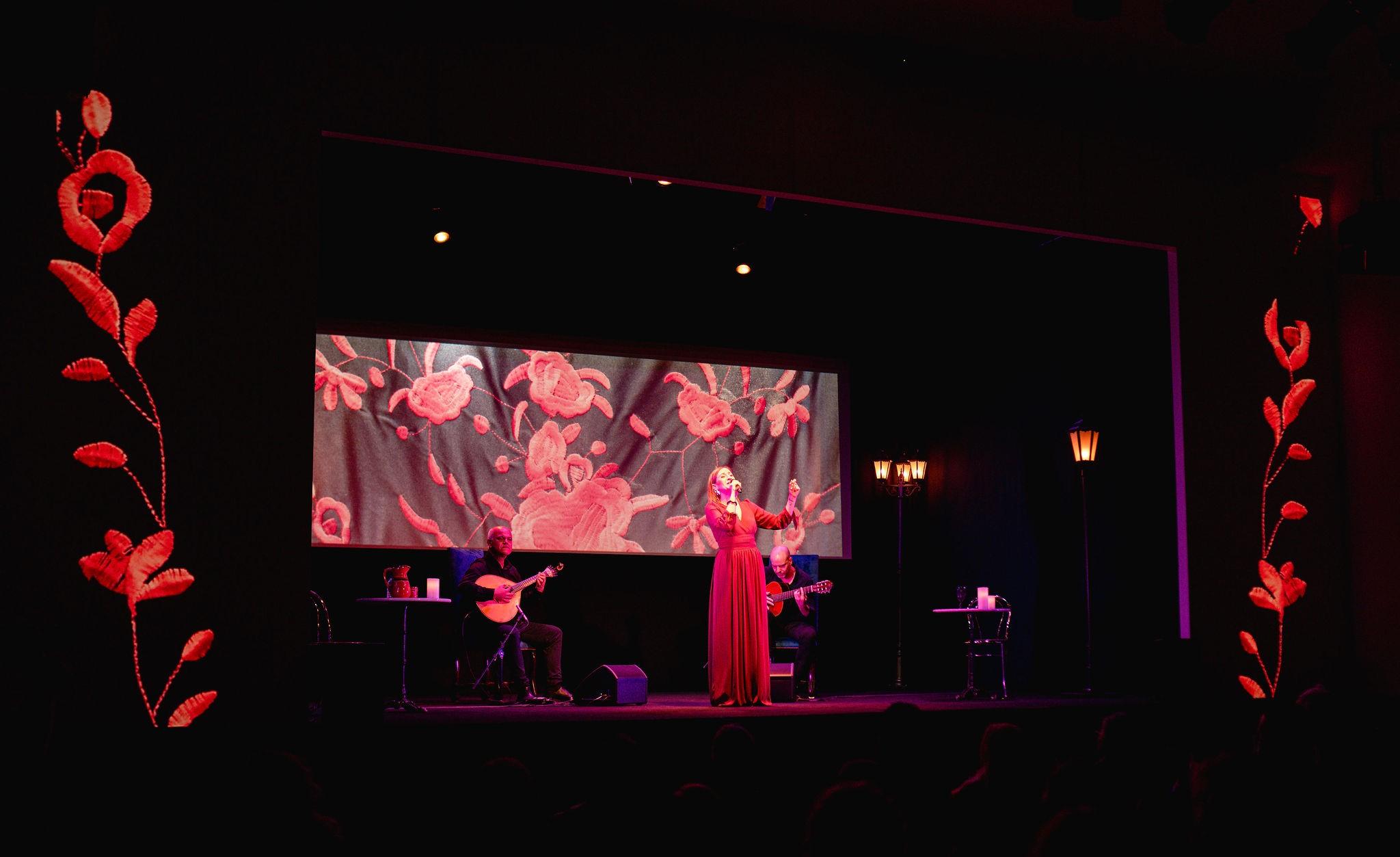
Witness the heart of Portuguese culture in a 50-min live fado show in the heart of Lisbon.

4.6 (3133)
FromFrom €23
See details
Lisbon Fado Night: Tapas, Wine & Live Music 3 hours Free Cancellation

Lisbon Fado Night: Tapas, Wine & Live Music

Savor traditional Portuguese bites and wine while soaking up soulful live Fado in an 18th-century Lisbon gem.

4.7 (955)
FromFrom €50
See details
Lisbon Fado Night: Guided Walk, Dinner & Live Show 2 hours Free Cancellation

Lisbon Fado Night: Guided Walk, Dinner & Live Show

Wander Alfama's storied lanes, then dine as soulful fado fills a candlelit casa in Lisbon.

4.5
FromFrom €119.2
See details
Your journey

Step-by-step — what your day looks like

1

Arrive and check in

Enter via Largo do Chafariz de Dentro and collect the audio guide at the front desk

What you'll see

Highlights not to miss

Permanent Exhibition Hall

The core chronological display traces fado from its 19th-century roots in Alfama's taverns to its recognition as UNESCO Intangible Cultural Heritage in 2011. Interactive listening stations let visitors play recordings from over a century of fado singers.

Portuguese Guitar Gallery

A dedicated room traces the technical evolution of the pear-shaped Portuguese guitar, the instrument that defines fado's distinctive sound, displaying handcrafted models from multiple luthiers. Some instruments on view date back over a century.

Former Water-Pumping Station Building

The museum occupies a repurposed 19th-century pumping station, with construction beginning in 1868 and two Anglo-French steam engines installed in 1869 to power Lisbon's water supply before its conversion to a cultural venue.

Documentation Centre

Open to researchers by appointment, this archive holds recordings, photographs, and personal donations from major fado figures who contributed items directly to the museum's founding collection.

Auditorium

The museum's performance space hosts regular live fado shows and educational programs, continuing the tradition documented in the exhibits just steps away.

Temporary Exhibition Gallery

A rotating space presents themed shows exploring specific eras, singers, or cultural intersections of fado, changing several times a year alongside the permanent collection.

The experience

What the visit is really like

You arrive at the Largo do Chafariz de Dentro just as the doors open at 10:00, and the square is still quiet, the tour groups an hour behind you. You pay the 5 EUR admission and step from Alfama's glare into cool, low-lit rooms. The first thing you notice on any fado lisbon tour is the sound — headphones and speakers layered so that a voice follows you between galleries. You pause at the guitarra portuguesa display, tracing the twelve strings and the fan of tuning pegs with your eyes. You slip on headphones at a listening station and scroll through decades of recordings, stopping on an Amália Rodrigues broadcast that fills your ears while her shawl hangs in the case beside you. You read the wall of fadista portraits like a family tree, each face passing the song to the next. You take the stairs to the temporary exhibition, then double back to the documentation centre where luthiers' tools and sheet music sit under glass. By the time you leave, the square outside has warmed and filled. You step back into the Alfama's lanes with the melody still running, the museum having handed you the thread that ties the whole neighbourhood together.

Everything You Need to Know

Your complete experience guide

All the details about your upcoming adventure in one place

Discovering Fado Lisbon in Alfama

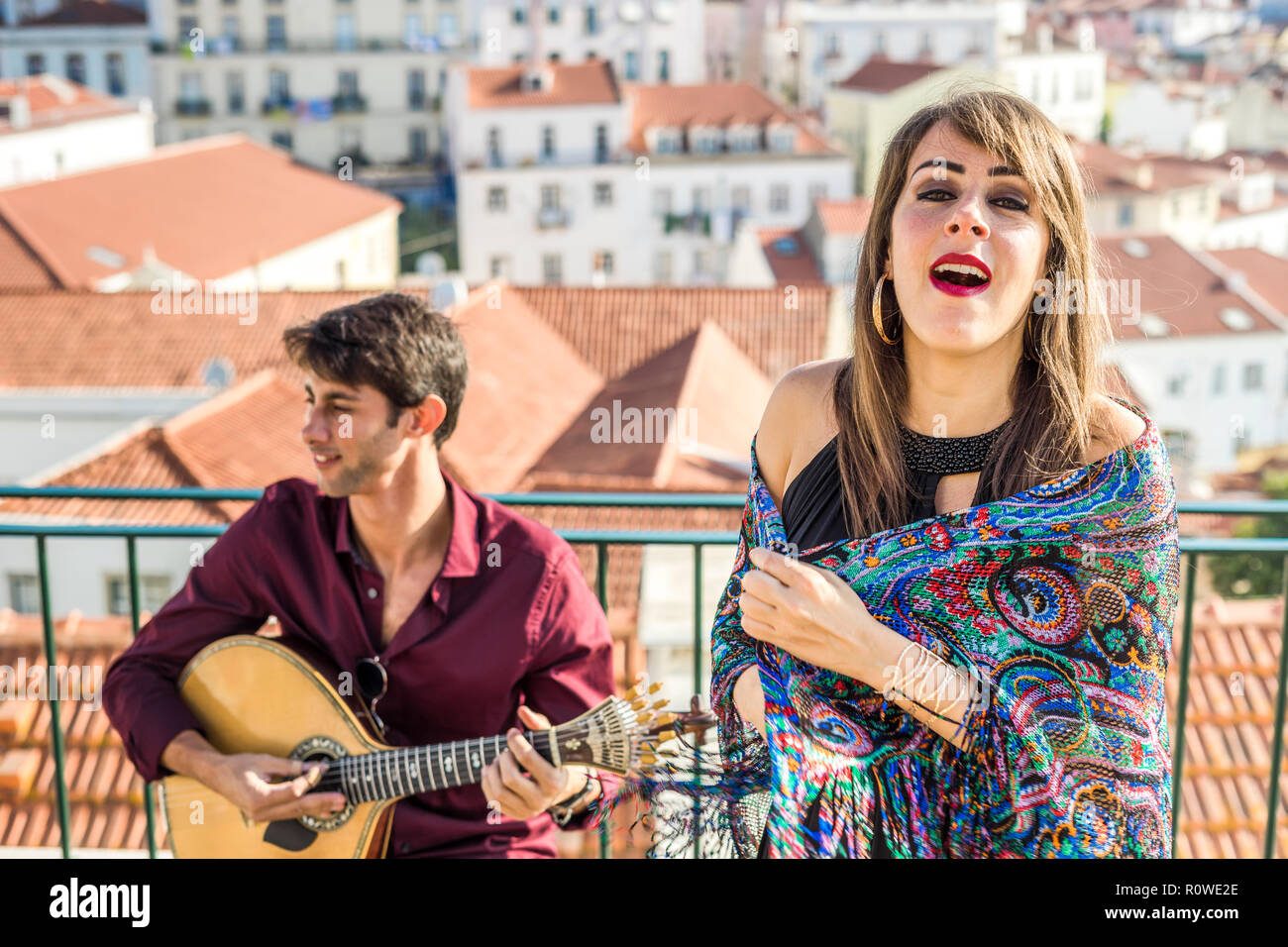
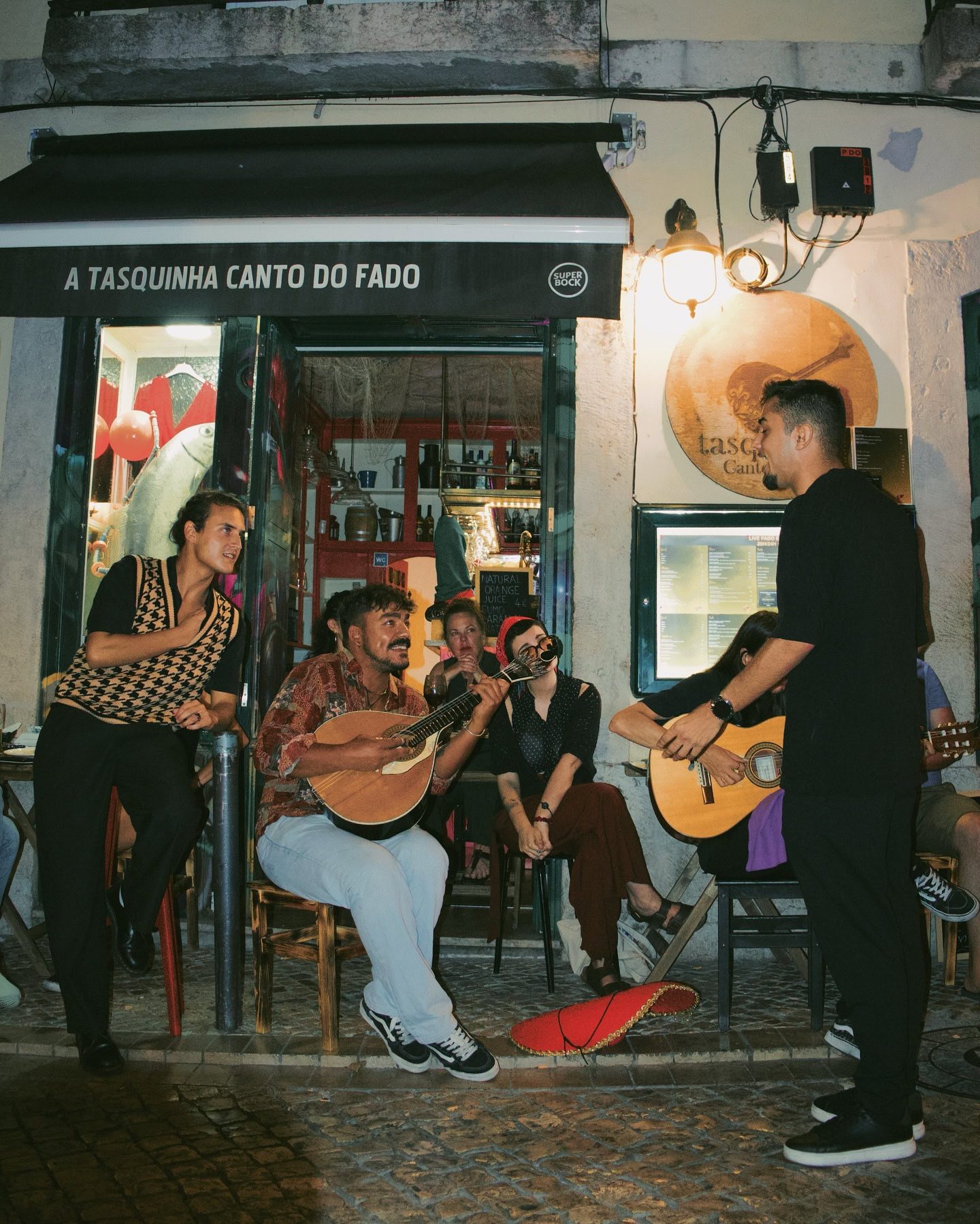
A fado lisbon evening pairs Portugal's mournful guitarra song tradition with the candlelit taverns of the Alfama and Bairro Alto quarters. Guided fado lisbon tours often begin near the Fado Museum, weaving through cobbled backstreets where saudade-soaked performances have echoed for generations. This Lisbon music experience offers an intimate window into a UNESCO-recognised art form and the neighbourhoods that shaped it.

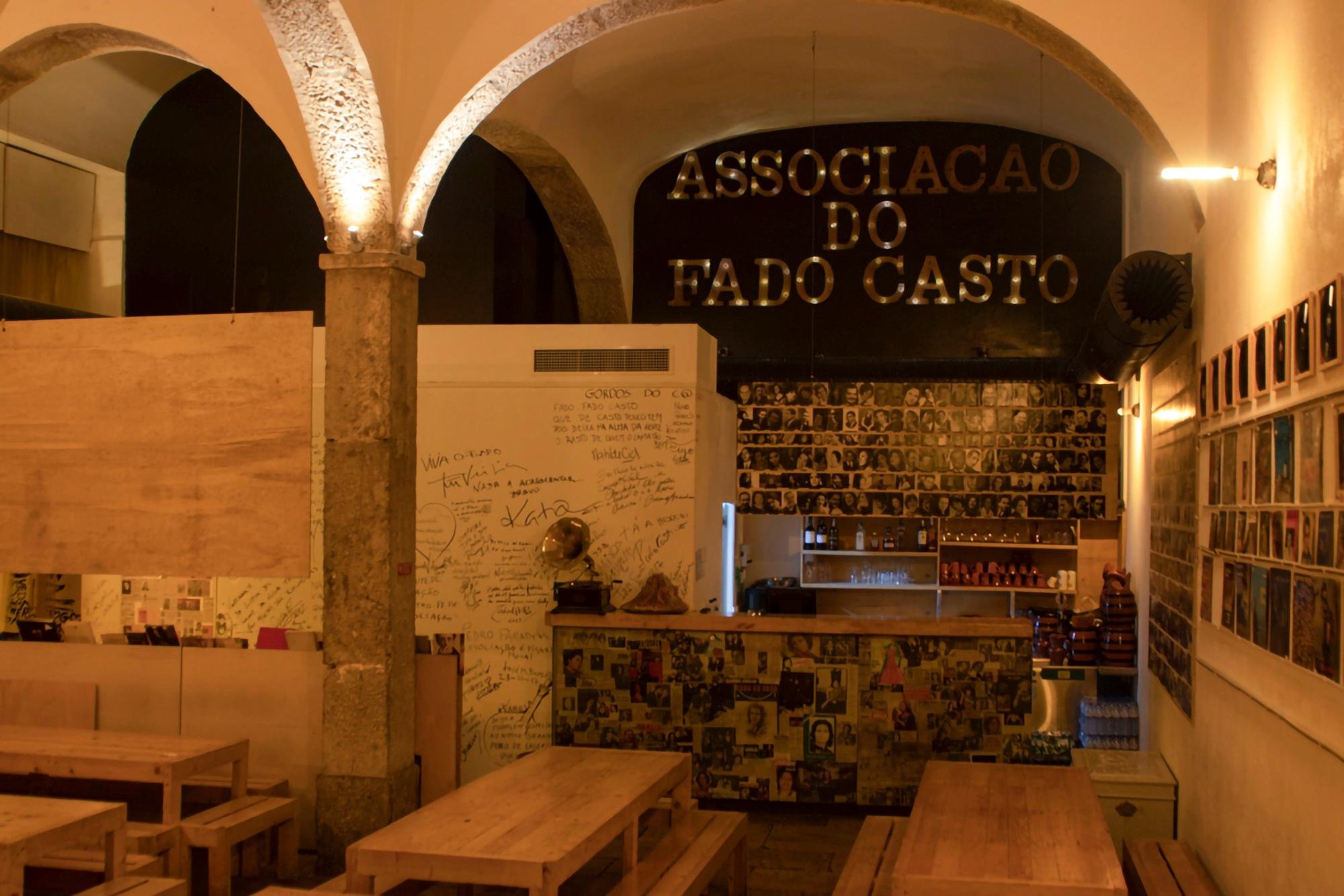
In 1998, when UNESCO had not yet inscribed the genre, the city opened a museum to a song that had never had a fixed address. Fado — from the Latin fatum, meaning fate — grew in the taverns and back streets of Alfama and Mouraria in the early nineteenth century, sung by dockworkers, sailors, and women who ran the waterfront houses below the castle. The Museu do Fado, standing at the Largo do Chafariz de Dentro where a medieval fountain once fed the neighbourhood, gathers that scattered inheritance under one roof. The building itself was once a water-pumping station, repurposed to hold what a moving voice leaves behind. Inside, the collection traces the arc from the guitarra portuguesa — the pear-shaped, twelve-string guitar whose teardrop headstock is the instrument's signature — to the recordings that carried the sound across the twentieth century. Amália Rodrigues, the singer who took fado from Lisbon's alleys to the world's stages, anchors the permanent display; her shawls, sheet music, and archived broadcasts sit alongside the tools of luthiers who still build guitars a few streets away. Why fado lisbon matters today is a question the museum answers without argument. When UNESCO added the tradition to its Intangible Cultural Heritage list in 2011, it recognised something the Alfama already knew: that this is living music, not a preserved artefact. The neighbourhood outside the doors still fills with saudade — the untranslatable Portuguese ache for what is absent — every evening, and the museum functions as its memory and its school. A sound archive, a documentation centre, and a training space for young guitarists keep the form breathing rather than embalmed. The layout is compact and deliberate. Listening stations let a visitor move through eras of the fado lisbon canon at their own pace, from wax-cylinder scratch to modern studio clarity, while portraits of the great fadistas line the walls in a single unbroken lineage. The permanent gallery reads less like a chronology of dates than a genealogy of voices, each singer handing the song to the next. For anyone drawn to Lisbon landmarks, this is the one that plays back — where the city's most exported emotion is catalogued, sourced, and returned to the street it came from. The guitarra, the shawl, the recorded sigh: together they make the case that a feeling can be a monument, and that Alfama built one to hold it.

Here a feeling becomes a monument, and Alfama built one to hold it.

Dress code

There is no formal dress code for visiting the museum in Alfama; casual, comfortable clothing is fine year-round. Because the building sits on Largo do Chafariz de Dentro near the waterfront, a light layer is useful in cooler months, and the surrounding cobbled streets call for flat, sturdy shoes.

Bags & security

Bags are subject to a visual check at the entrance on Largo do Chafariz de Dentro, and large backpacks or suitcases must be left at the small cloakroom near the ticket desk. Small daybags and camera bags can usually be carried through the galleries without issue.

Photography

Non-flash photography for personal use is generally permitted in the permanent exhibition rooms, but flash and tripods are restricted to protect archival photographs, instruments, and textiles. Filming for commercial or professional purposes requires prior written authorization from the museum.

Families & strollers

Children are welcome throughout the museum, and those under 12 enter free of charge. The exhibits mix screens, headphones, and instrument displays that hold younger visitors' attention for roughly an hour.

Accessibility

The museum, housed in a converted 19th-century water-pumping station, has a lift connecting all exhibition floors and step-free routes from the entrance on Largo do Chafariz de Dentro. Wheelchair users and visitors with reduced mobility can access the permanent exhibition, auditorium, and shop without needing stairs.

Food & drink

Outside food and drink may not be consumed inside the exhibition galleries; water in a closed bottle is generally tolerated but should be kept in a bag. The on-site café-restaurant is the only area where eating and drinking are permitted within the museum building.

Not allowed

× Large suitcases × Umbrellas (open) × Selfie sticks × Tripods × Flash photography equipment × Food and open drinks in galleries × Sharp objects × Skateboards or scooters × Drones × Pets (except service animals) × Bulky backpacks in exhibition rooms × Professional filming equipment without permit

What to bring

✓ Valid ID or ticket confirmation ✓ Comfortable walking shoes ✓ Light jacket or layer ✓ Water bottle ✓ Camera or phone ✓ Small day bag ✓ Cash for the gift shop ✓ Headphones for audio guide app

Opening hours

Mon Closed

Weekly closure day

Tue 10:00 – 18:00

Last entry 17:30

Wed 10:00 – 18:00

Last entry 17:30

Thu 10:00 – 18:00

Last entry 17:30

Fri 10:00 – 18:00

Last entry 17:30

Sat 10:00 – 18:00

Busier, tour groups midday

Sun 10:00 – 18:00

Free entry before 14:00 for residents

Closures & exceptions

  • ·Every Monday — Weekly closure
  • ·Jan 1 — New Year's Day
  • ·May 1 — Labour Day
  • ·Dec 24 — Christmas Eve
  • ·Dec 25 — Christmas Day
  • ·Dec 31 — New Year's Eve

At a glance

Hours

Tue–Sun 10:00–18:00, closed Monday

Getting there

Public transport · 10-15 min · Metro or bus single ticket, around 1.65-2 EUR

Take the Blue Line metro to Santa Apolónia, then walk about 5-10 minutes east along the riverside streets to Largo do Chafariz de Dentro. Buses 728, 735, 759, and 794 also stop near Alfândega, a short walk from the museum.

Tram · 20-25 min from Baixa · Tram single ticket, around 3 EUR

Tram 28 runs through Alfama; disembark near the Rua dos Remédios stop and walk roughly 5 minutes downhill to the museum.

Walk · 15-20 min · Free

From Baixa or the Sé Cathedral, a walk through Alfama's narrow lanes reaches the museum on foot, passing São Miguel church along the way.

Taxi · 10-15 min from Baixa · Approx. 6-10 EUR

Taxis and ride-shares like Uber or Bolt can drop passengers directly at the entrance on Largo do Chafariz de Dentro.

Cancellation policy

Tickets booked online for fado Lisbon visits can typically be cancelled or rescheduled up to 24 hours before the visit date for a full refund of the 5 EUR entrance fee. After that window, or for no-shows, the ticket is generally non-refundable.

Plan your time

How long do you need?

Recommended time

1-2 hours

Most visitors move through the exhibits, audio-guide stops, and recording archive at Museu do Fado in about 90 minutes, with music enthusiasts lingering closer to two hours to sit through additional listening stations. Arriving at opening, between 10:00 and 11:30, means walking straight into the galleries instead of queuing behind a fado lisbon tour group that has just stepped off a coach. That window matters more than the ticket line itself, since the museum rarely sees the kind of backup common at larger Lisbon landmarks. By early afternoon the pace changes noticeably as cruise-ship arrivals and scheduled fado lisbon tours fill the entrance hall and the audio-guide desk, so add 15-20 minutes if you're visiting between noon and 3pm.

Crowd levels through the day

Opening (10:00-11:00) Light
Late morning (11:00-12:30) Moderate, tour groups begin
Midday (12:30-14:30) Busiest, cruise and group arrivals
Early afternoon (14:30-16:00) Moderate, still active
Late afternoon (16:00-17:00) Thinning out
Last hour (17:00-18:00) Quiet before close
Plan ahead

When to go — year at a glance

Weather · crowds · average price — dots go green to amber to red as each metric rises.

Spring (Mar–May)

Mild temperatures around 15-20°C and moderate crowds make spring a comfortable season for a fado Lisbon visit, with fewer coach tour groups than summer.

Insider tips

Helpful tips for your visit

Book online in advance

Purchasing entry online ahead of a fado Lisbon visit avoids the physical ticket line at busy midday hours.

Where to meet

Meeting points

Museum main entrance

Largo do Chafariz de Dentro, N.º 1, 1100-139 Lisboa

Ticket desk just inside the door, look for the museum's tiled facade

Get directions

Santa Apolónia metro exit

Santa Apolónia Station, Lisbon

About a 5-10 minute walk east along the waterfront to the museum

Get directions
The story

The history behind the site

Fado surfaced in the 1840s along the Tagus waterfront, in the taverns and back streets of Alfama and Mouraria. Sailors, dockworkers, and the urban poor carried its melancholy verse. Maria Severa Onofriana, born in 1820 and dead by 1846, became its first legendary voice, tying the song to poverty and longing. The story of fado lisbon begins in these dockside quarters, where the Portuguese guitar and the classical guitar shaped a sound of saudade. Through the 20th century, fadistas refined the form. Amália Rodrigues, who debuted in 1939, carried fado onto international stages and recording. Under the Estado Novo, the regime licensed performers and censored lyrics, pushing the song into professional fado houses. In 2011, UNESCO inscribed fado on its Intangible Cultural Heritage list, cementing its place among the enduring Alfama traditions that curious travellers now trace on fado lisbon tours. The museum building carries its own dated saga. Raised in 1868 as the Recolha de Águas, a water pumping station, it served the neighbourhood until 1938. After its industrial life ended, it passed through decades of altered use, functioning as a workshop and, following the Carnation Revolution of 1974, as a local Communist Party premises. The structure survived neglect before its 1998 conversion into the Museu do Fado, opening at Largo do Chafariz de Dentro. Restoration preserved the brick shell and gave the collection of guitars, scores, and archival recordings a permanent home. Today the museum anchors a fado lisbon tour of the old quarter, standing beside the springs that once fed the station. Its archive documents the fadistas, luthiers, and lyricists who built the genre across two centuries. Visitors weighing fado lisbon tickets encounter the Portuguese guitar tradition, the saudade at the heart of the verse, and the Alfama streets where the song still rises from doorways at night. The building's water-station origins and its layered post-1974 history make it a living record of both a musical form and a Lisbon landmark, a place where the dockside taverns of 1840 and the UNESCO recognition of 2011 meet under one restored roof.

1840s

Fado emerges in the taverns and docks of Alfama and Mouraria in Lisbon.

1820–1846

Maria Severa, fado's first legendary singer, lives and dies young, binding the song to poverty.

1868

The building opens as a water pumping station serving the waterfront quarter.

1938

The pumping station ceases operation after seventy years of service.

1939

Amália Rodrigues debuts, later carrying fado to international audiences.

1974

After the Carnation Revolution, the disused structure becomes a local Communist Party site.

1998

The building is converted and reopens as the Museu do Fado.

2011

UNESCO inscribes fado on its Intangible Cultural Heritage list.

Gallery

Moments from the experience

With kids

Visiting with kids

A fado lisbon visit works well with kids if you treat it as an audio-guide museum rather than a look-and-move-on stop: the exhibits are built around listening stations, so pacing depends more on attention span than distance covered. Families who plan around the audioguide, and check for one of the museum's occasional children's shows, tend to have the smoothest visits.

Best ages

The museum suits kids from about 6 up, since the experience leans on listening to audio tracks and reading panels rather than hands-on play. Younger children can still enjoy the guitars and costumes on display, but expect a shorter attention span for the audioguide sections.

Children's audioguide

Ask at the desk about the audioguide, available in Portuguese, English, French and Spanish, and see whether a kid-oriented track is running that day, as the museum periodically simplifies content for younger listeners. This keeps children engaged with the same numbered-stop format adults use, just at a lighter level.

Family shows

Watch the museum's calendar for Histórias na Canastra, a themed show for ages 3 to 12 that mixes shadow projections, music and audience singing, and runs about 50 minutes. It is a good way to break up a static exhibit visit and works well as a standalone activity if kids tire before the full self-guided fado lisbon tour is done.

Pacing

Split the visit into short chunks: 15 to 20 minutes browsing instruments and photos, then a rest at the multimedia listening stations, since the collection rewards lingering rather than a fast walkthrough. Watching for restlessness and heading outside to Alfama's square is an easy reset.

Strollers

The building includes wheelchair access, which also makes it manageable to bring a stroller through most galleries, though tight display areas may require folding it for a few stretches.

Facilities

Two manually operated wheelchairs are available to borrow for free, useful if a tired toddler needs to ride rather than walk the last stretch of the visit.

Food & drink

Where to eat nearby

The museum has no on-site café, but Alfama's alleys around Largo do Chafariz de Dentro cover everything from a fadista-run dinner to a quick pastel de nata, so a fado lisbon afternoon slides easily into an evening meal without much walking.

Restaurante Esquina de Alfama

€€

Dinner with live fado

A tiny fado house on Rua de São Pedro where singers perform tableside most nights. Go for grilled meat or fish rather than the petiscos, and book ahead since tables fill fast once the music starts.

A Travessa do Fado

€€–€€€

Dinner with live fado, next to the museum

Set right beside the Fado Museum with an indoor glass-roofed room and a terrace, this is the natural pick after a fado lisbon tour of the exhibits. Petiscos like grilled octopus and garlic shrimp anchor the menu, with fado sets on select evenings.

O Cartaxeiro

Quick lunch across the street

A small, no-frills terrace directly on Largo do Chafariz de Dentro, right across from the entrance. Handy for grilled fish or squid between museum visits, though English is limited.

Pastelaria Guadalupe

Café and pastries

A long-running neighborhood pastelaria a short walk away, known for its pastel de nata and quick toasts. Good for a coffee stop before opening time or a light bite on the way out.

Customer Reviews

What travelers say

Real experiences from real travelers

4.4
Based on undefined reviews
1 ★ 1100
2 ★ 732
3 ★ 1300
4 ★ 3900
5 ★ 14300
M
Marta S.
Portugal · 2026-06-18

Alfama at its best

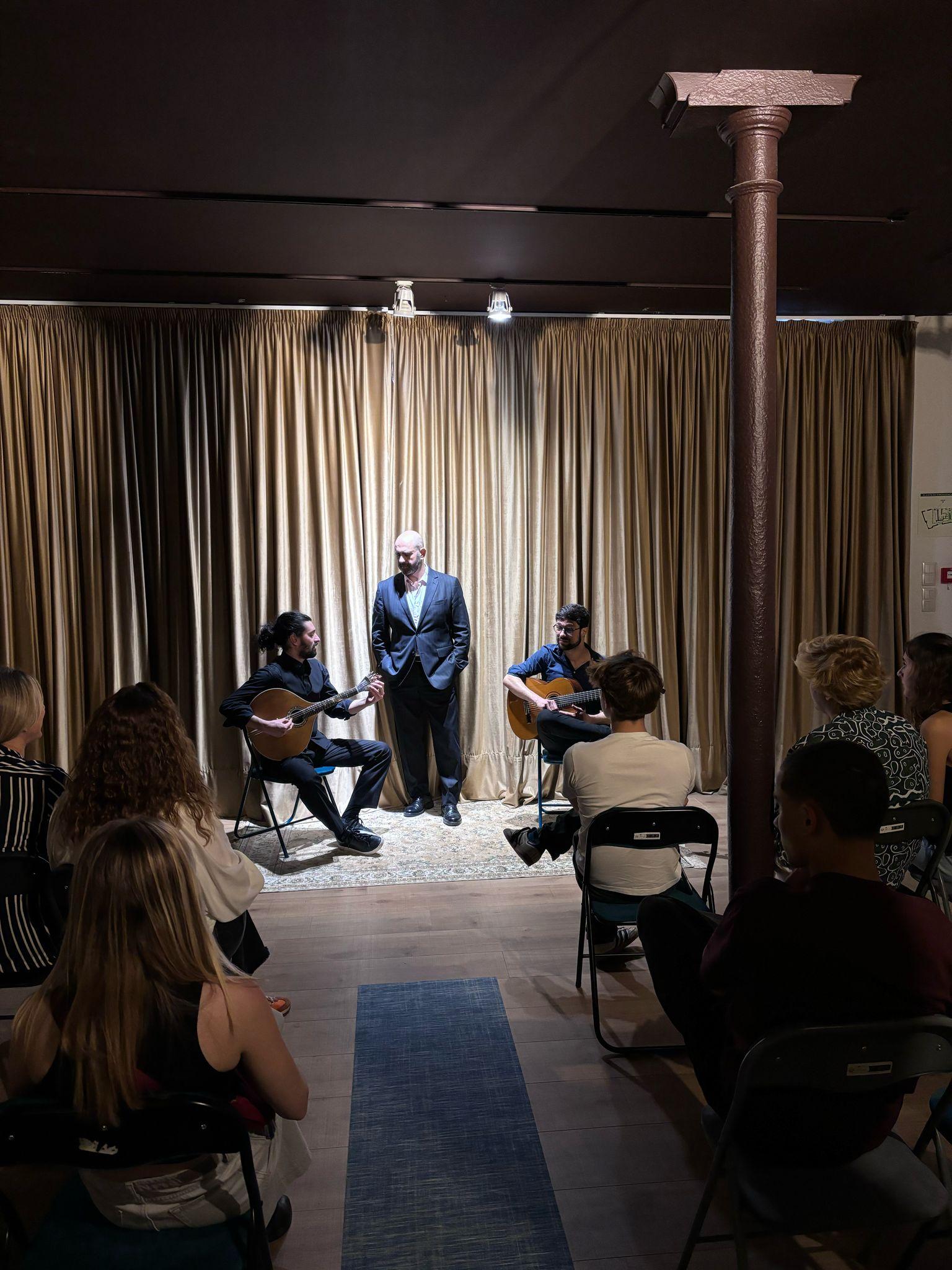
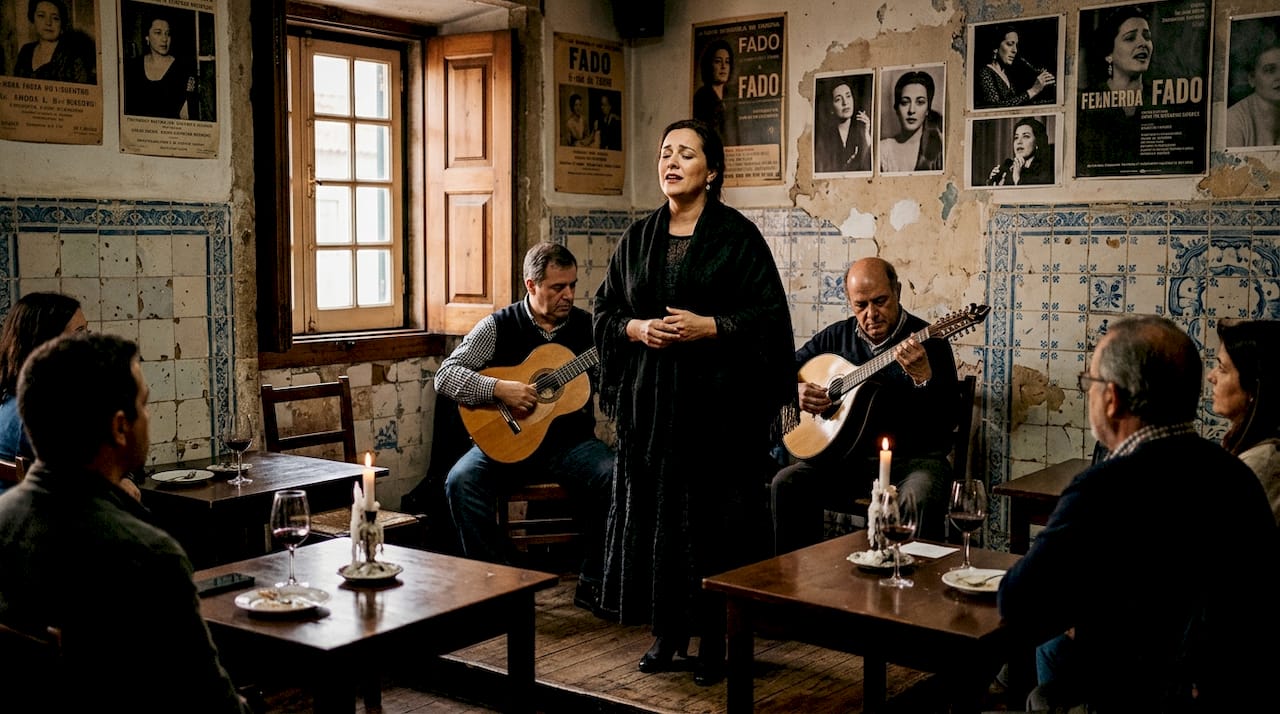
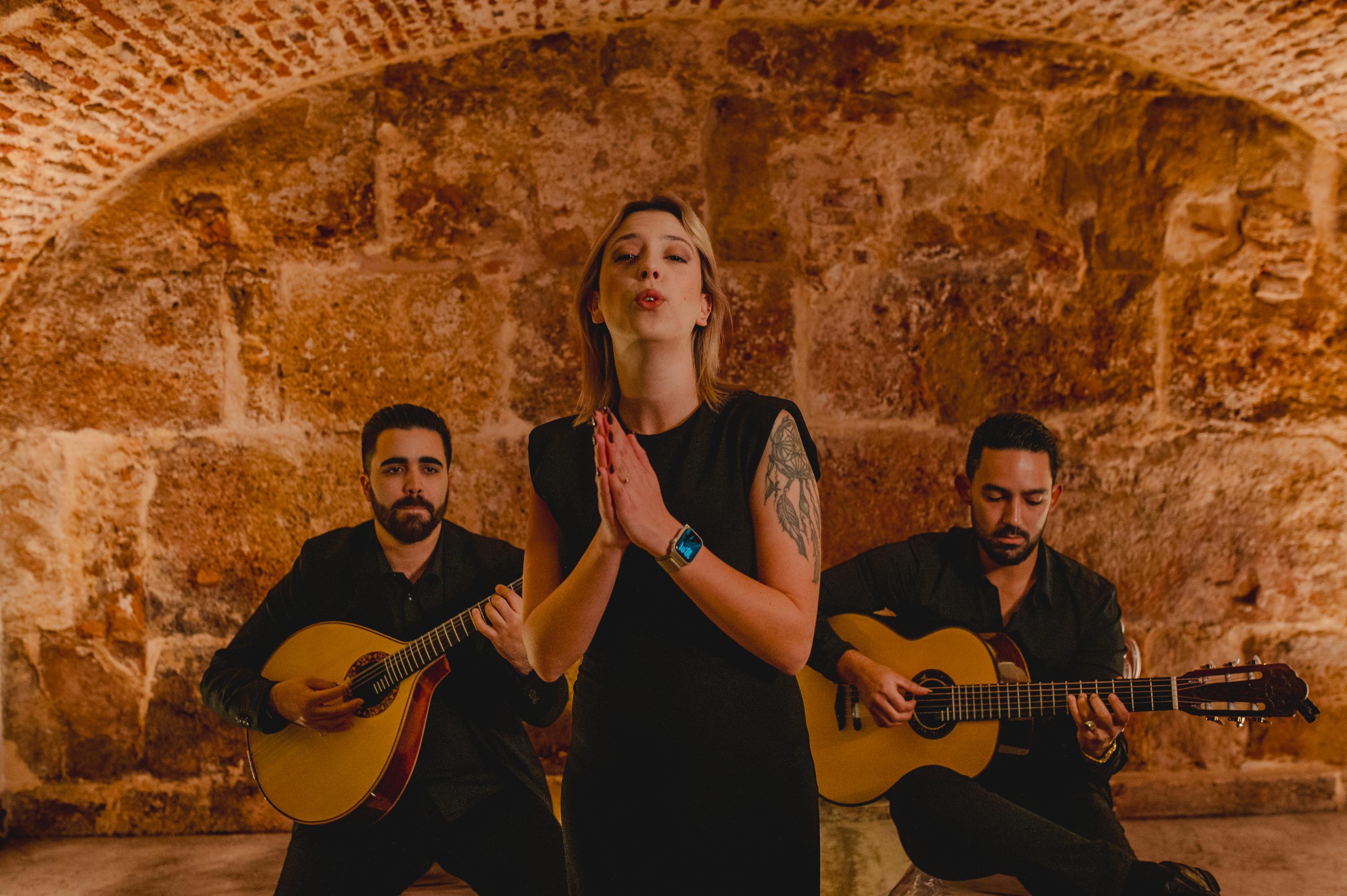
We booked one of the smaller fado lisbon venues in Alfama and arrived just as the sun dropped behind the rooftops. The room held maybe twenty people, the lights dimmed, and the Portuguese guitar started before anyone had finished their wine. You feel the saudade in the singer's voice even without understanding the lyrics.

J
James H.
United Kingdom · 2026-05-30

Goosebumps in a stone room

The acoustics in that old Alfama cellar did something to the singer's voice I can't describe. Our fado lisbon tour guide walked us through the history briefly before the first set, then everyone fell silent. Book ahead because the good rooms fill fast.

A
Anke B.
Germany · 2026-07-02

Moving but warm night

A humid July evening and the doors were open to the cobbled lane outside. The fadista performed three sets with a short break, and the guitarist's fingers moved so fast in the fast numbers. Only note is the tables are tight, so you sit close to strangers, which honestly added to it.

R
Ricardo M.
Brazil · 2026-04-14

Voz e guitarra

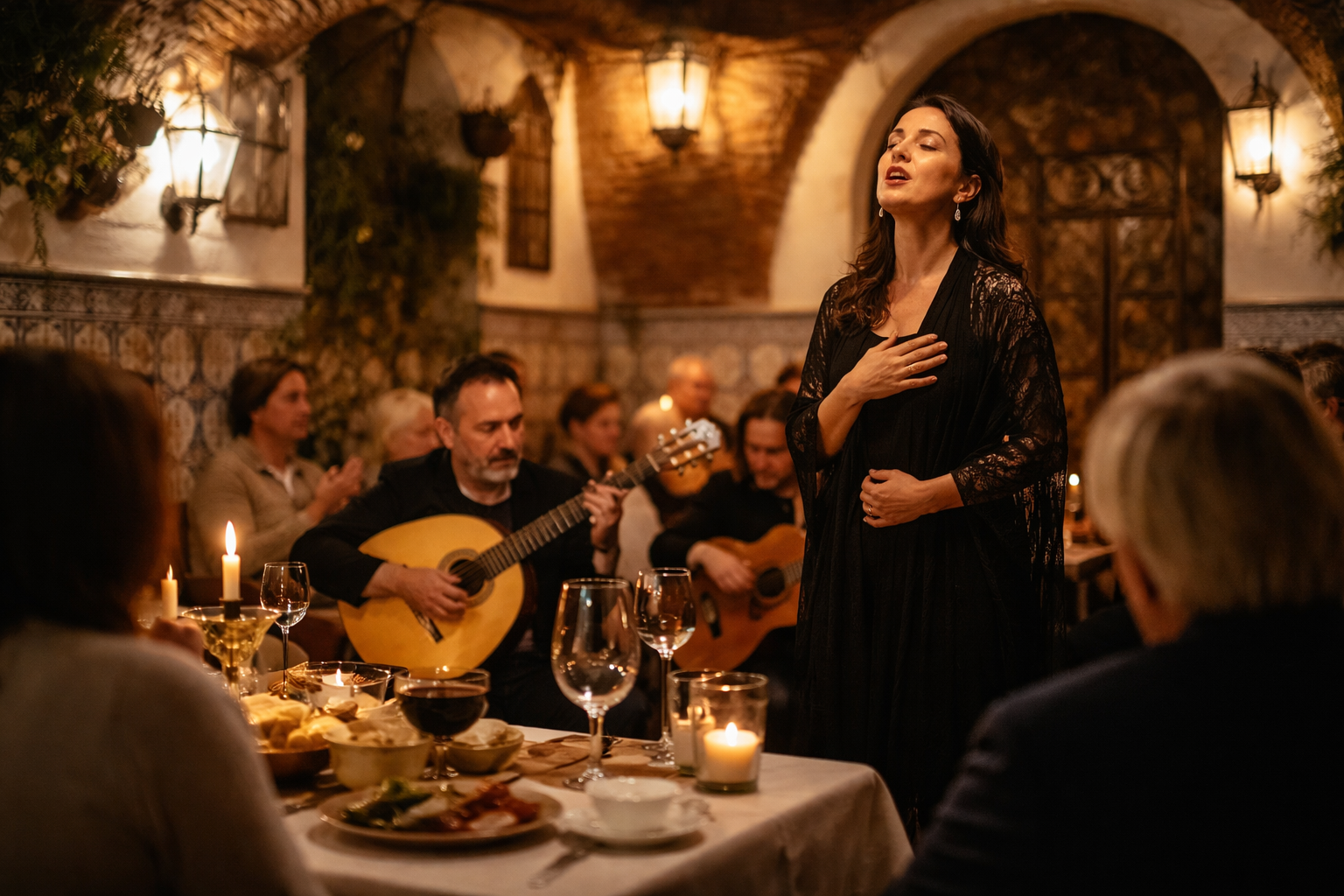
The combination of the Portuguese guitar and viola pulled the whole room in. This was the highlight of our lisbon landmarks trip, more so than any viewpoint or castle. The fadista sang with her eyes closed and the candlelight flickered the whole time.

E
Emily R.
United States · 2026-06-25

Worth every minute

We wandered into Alfama at dusk and the narrow streets echoed with rehearsing singers. Our fado lisbon tickets included a small glass of port and the performance ran just over an hour. The singer explained that fado means fate, and by the end that made complete sense.

Y
Yuki T.
Japan · 2026-03-08

Quiet and intense

I did not expect the silence between songs to feel so heavy in the best way. One of the fado lisbon tours I compared included dinner but we chose the drinks-only room and I am glad we did. The stone walls and low ceiling made the guitar resonate beautifully.

S
Sofia L.
Spain · 2026-02-11

Authentic and small

Casa de fado in the old quarter, no microphones, just voice filling the space. The winter evening was cold outside but the room warmed up quickly once it was full. If you want the real Lisbon fado experience, skip the big touristy halls and find a tiny place like this.

T
Thomas D.
France · 2025-11-20

Nuit inoubliable en musique

The lanterns along the Alfama lane and the sound of the guitarra portuguesa made the whole walk feel cinematic. Our guide on the fado lisbon tour explained the difference between Lisbon and Coimbra styles, which I appreciated. The performer's final song left the whole room quiet for a moment before the applause.

G
Grace W.
Australia · 2026-01-22

Small room, huge feeling

We squeezed into a candlelit corner and the fadista stood barely two metres away. The Lisbon fado night was the memory my partner and I keep coming back to from the trip. Bring cash for the smaller houses, some do not take cards.

P
Peter N.
Netherlands · 2025-09-15

Good but crowded night

The music itself was excellent and the guitarist was clearly a master. My only issue was that the venue oversold and we ended up standing at the back for the first set. Still, hearing authentic fado in Alfama was something I would recommend.

FAQ

Frequently asked questions

Everything you need to know for your journey

Around the corner

Nearby landmarks worth a detour

São Vicente de Fora Monastery

12 min walk

church

A 16th-century monastery known for its azulejo-tiled cloisters and panoramic terrace over the Tagus.

National Pantheon

10 min walk

landmark

The domed former church, centuries in the making, now serves as the resting place of notable Portuguese figures.

Miradouro de Santa Luzia

8 min walk

viewpoint

A tiled terrace overlooking the rooftops of Alfama and the Tagus estuary, popular at sunset.

São Jorge Castle

12 min walk

landmark

A Moorish-era hilltop castle with ramparts and gardens overlooking the historic center.

Lisbon Cathedral (Sé)

10 min walk

church

The city's fortress-like Romanesque cathedral, founded in the 12th century after the Christian reconquest.

Where to stay

Where to stay nearby

Alfama district

walk from most guesthouses

district

Alfama's tangle of alleys around the museum holds numerous small guesthouses and boutique stays within a 5-10 minute walk.

Memmo Alfama

10 min walk

boutique

A design-focused hotel perched above the district with a rooftop pool facing the Tagus.

Santiago de Alfama

8 min walk

luxury

A restored 16th-century palace turned boutique hotel tucked into the Alfama hillside.

Baixa district

15-20 min walk

mid-range

Lisbon's central grid neighborhood offers a wide range of mid-range hotels within an easy walk or short tram ride.

Ready for Adventure?

Join thousands of happy travelers who have discovered this incredible experience

Book Your Experience Now