3 hr
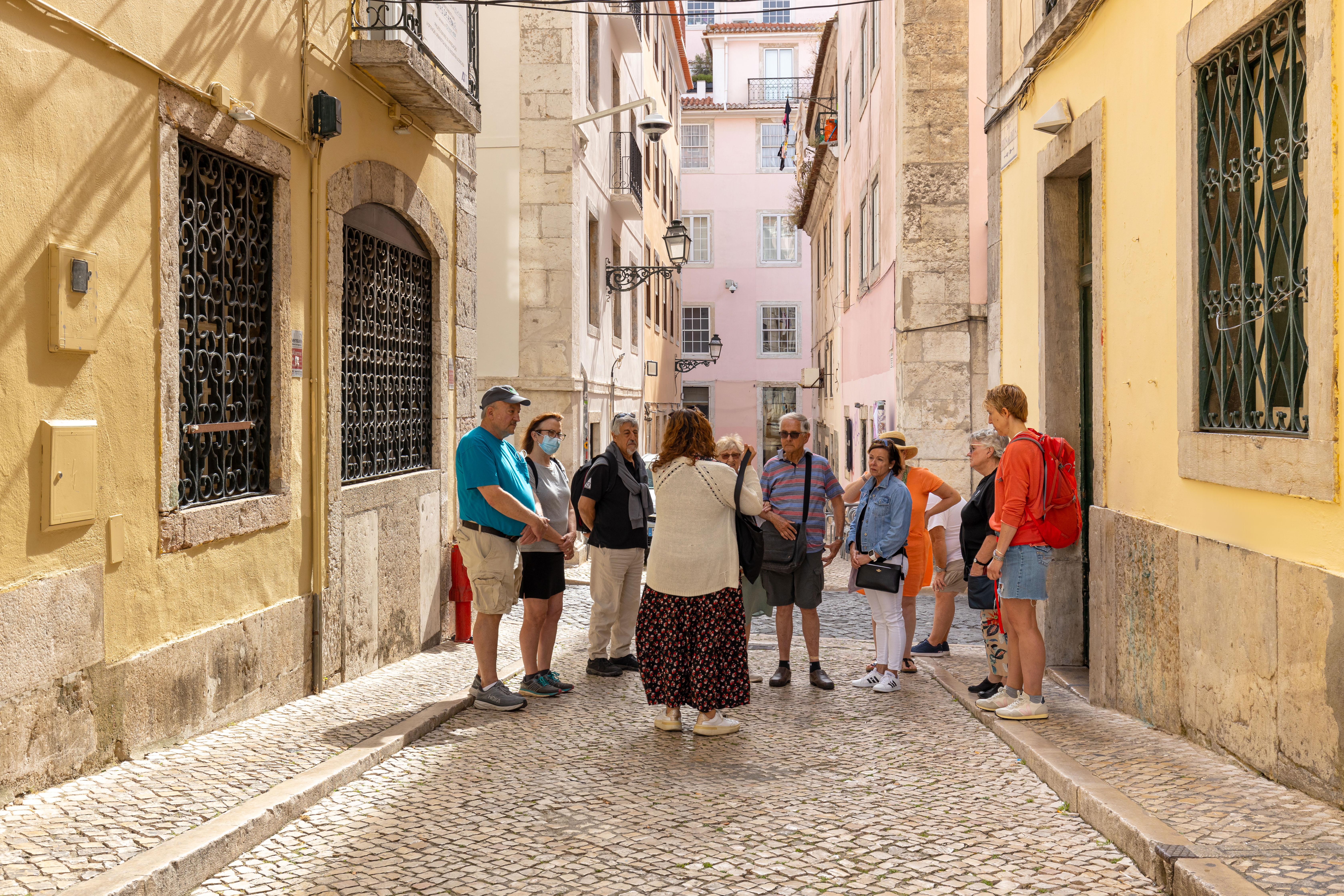
Lisbon History & Lifestyle Walking Tour
- Expert local guide
- Small group
- Skip-the-line access
- Free cancellation
Walking Tour Lisbon — Guided Routes & Free-Entry Streets
Cobbled hills at first light, river-bright squares by noon.
Compare fares, pick the fit — all bookings are mobile-voucher and eligible for free cancellation where shown.
3 hr
3 hr
3 hr
Most first-time visitors do best starting with a free walking tour lisbon route through Baixa and Alfama, then adding a small-group Lisbon history tour if they want deeper storytelling and fewer people around the guide.
|
Top pick Free Walking Tour |
Small-Group Paid Tour | |
|---|---|---|
| Group size | 15–30+ walkers, size varies by season | 6–14 people, capped by operator |
| Cost model | Free entry, tip 10–15 EUR per person | Fixed price, 24–29 EUR per person |
| Depth of content | Broad overview, landmark-focused narration | Themed, story-driven with room for questions |
| Flexibility | Fixed route, guide sets the pace | Smaller group allows detours and questions |
| Booking requirement | Reserve online, no upfront payment | Advance booking with prepayment required |
| Best for | Budget travelers wanting a quick orientation | Visitors wanting context and a quieter group |
| See tickets & prices |
Verdict: Neither replaces the other: the free tour is the cheapest way to get oriented around Praça do Comércio and Alfama, while the paid small-group option rewards travelers who want a slower pace and a guide who isn't working a tip crowd of thirty.
Hand-picked experiences loved by thousands of travelers
1.5 hours
Free Cancellation
Uncover Lisbon's vibrant urban art scene across historic neighborhoods in just 90 minutes.
3 hours
Free Cancellation
Explore Lisbon's golden age in 3 hours — UNESCO sites, river views & a legendary egg tart.
2 hours
Free Cancellation
Explore Lisbon's oldest streets on a private 2-hour walk through Alfama's hidden alleys and layered history.
Begin at the equestrian statue of King José I and the Cais das Colunas riverfront steps facing the Tagus River
Western Europe's largest royal square at roughly 36,000 square meters, it was rebuilt in a grid layout after the 1755 earthquake destroyed the Ribeira Palace that once stood here. A bronze equestrian statue of King José I anchors the center, flanked by arcaded Pombaline buildings now filled with cafés.
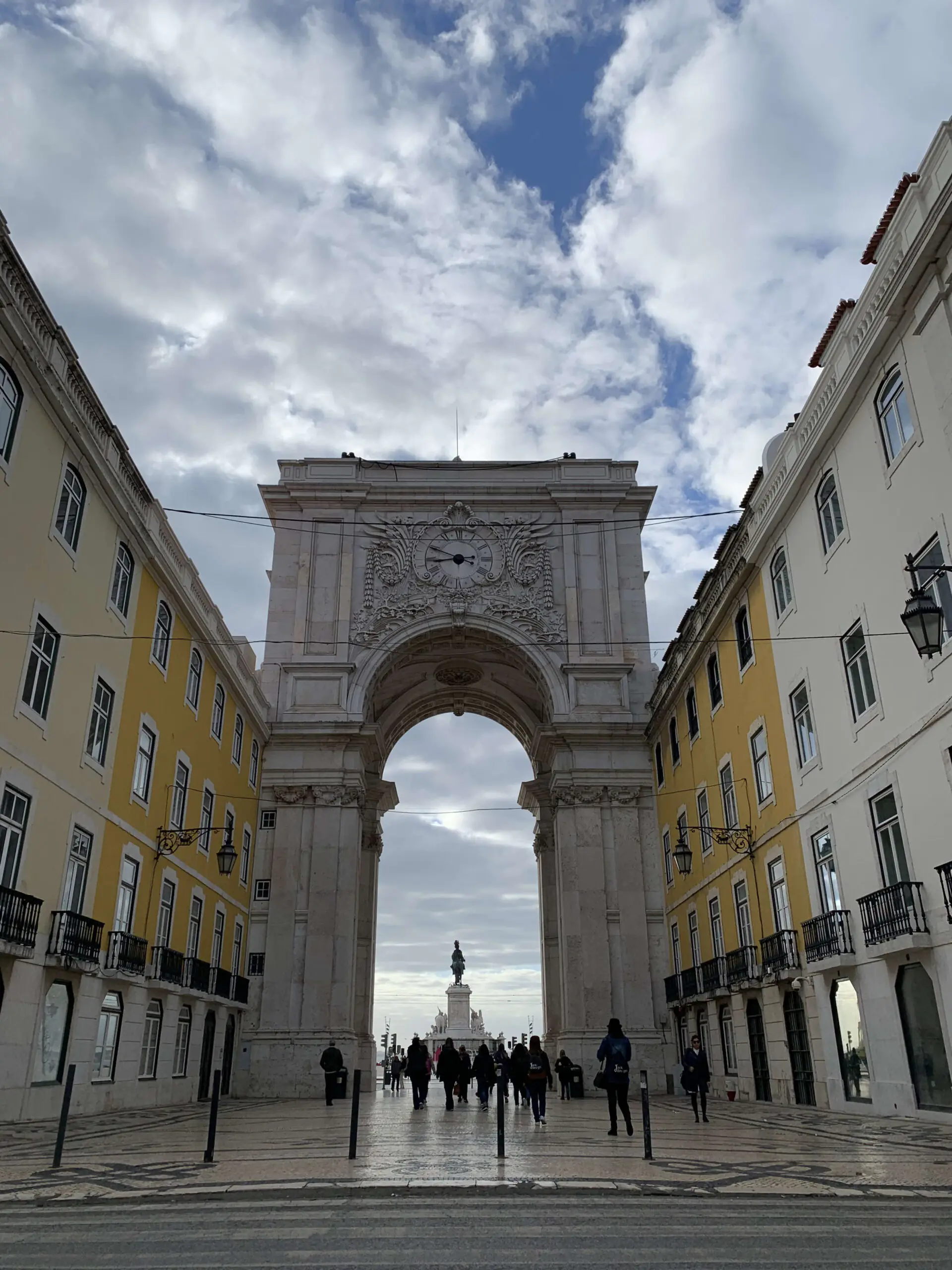
Planned in 1759 but not completed until 1875, this triumphal arch carries sculptures of Vasco da Gama, the Marquis of Pombal, and other national figures beneath allegorical figures of Glory crowning Genius and Valor. An elevator installed only in 2013 finally opened the rooftop viewpoint to the public.
These marble steps once served as the ceremonial river entrance where kings and dignitaries disembarked directly into the square. Two stone columns frame the steps, giving the site its name, which translates to Quay of the Columns.
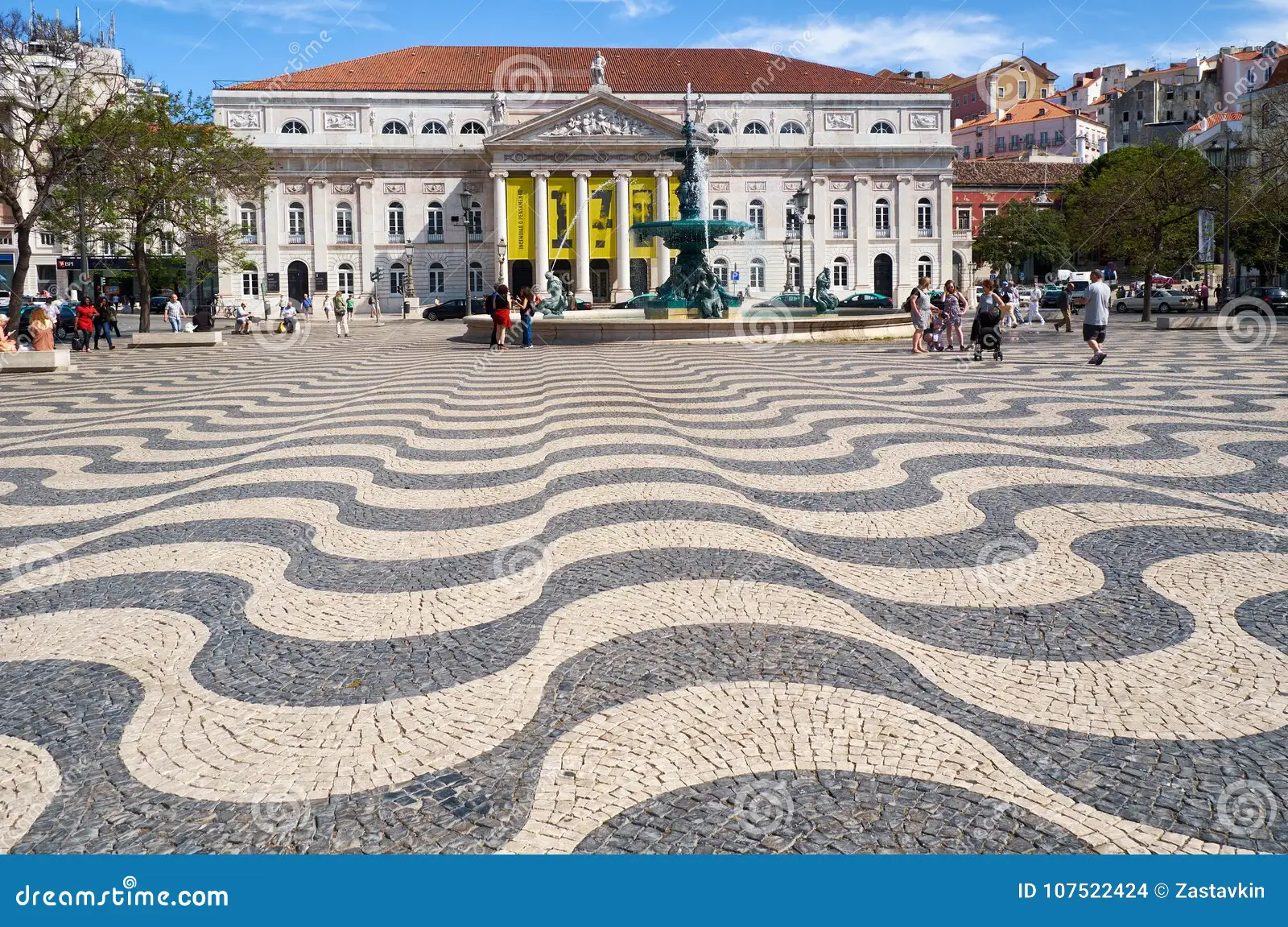
Lisbon's principal downtown boulevard runs north from the arch through the Baixa grid, lined with mosaic Portuguese pavement, street performers, and shopfronts in restored Pombaline façades.
Founded in 1147 shortly after the Christian reconquest of the city, this fortress-like cathedral combines Romanesque towers with later Gothic cloister additions, making it the oldest church in Lisbon still standing near the walking route.
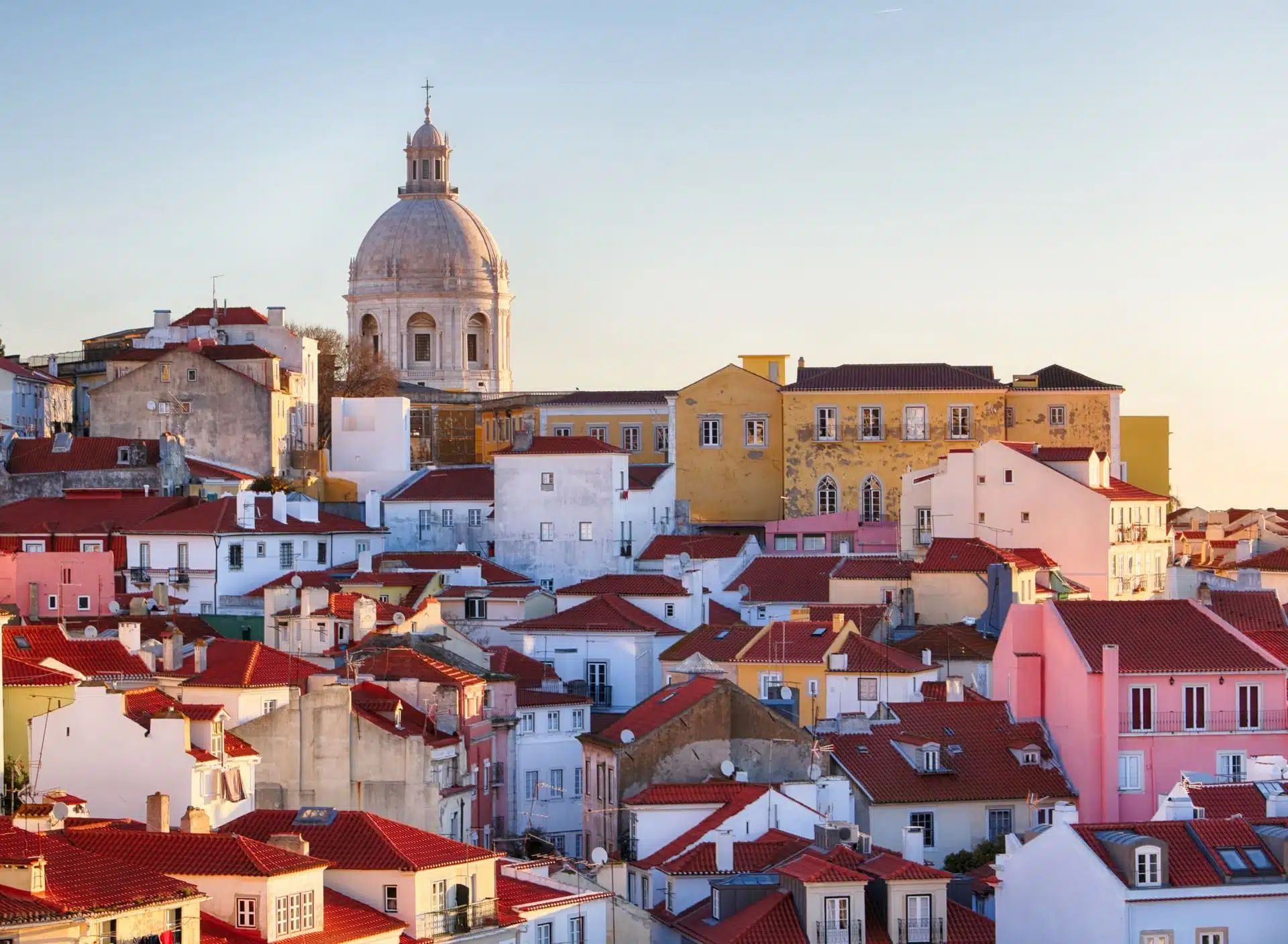
Crowning one of Lisbon's seven hills, this fortress dates to the 11th century and offers a rooftop-level panorama over the Baixa grid, the Tagus River, and the terracotta roofs of Alfama below.
You begin at Praca do Comercio between 09:00 and 11:00, when the air off the Tagus is still cool and the midday tour groups haven't arrived. The square is nearly empty, the arcades throwing long shadows across the stone. You pass beneath the Rua Augusta arch and step straight into the Baixa grid, where the streets run dead flat and dead straight toward Rossio. Then you turn east and the climb starts. You take the staircases into Alfama one worn step at a time, pausing where an alley opens onto the miradouro of Santa Luzia and the whole river spreads out below you. You trace tiled walls with a fingertip, listen for fado leaking from a half-open shutter, and let the gradient set your pace rather than a clock. By late morning you reach the Castelo de Sao Jorge at the summit, the highest point of your walking tour lisbon, and look back over the roofs you climbed through. Coming down, you cut west into Chiado, resting a moment in the roofless Carmo convent where the sky stands in for a ceiling. Because the streets are public and free, you stop whenever you like — no ticket queue, no timed slot. You started early, you climbed slowly, and you finish with the city read from the ground up: not a checklist, but a route walked at the speed it was built for.
All the details about your upcoming adventure in one place
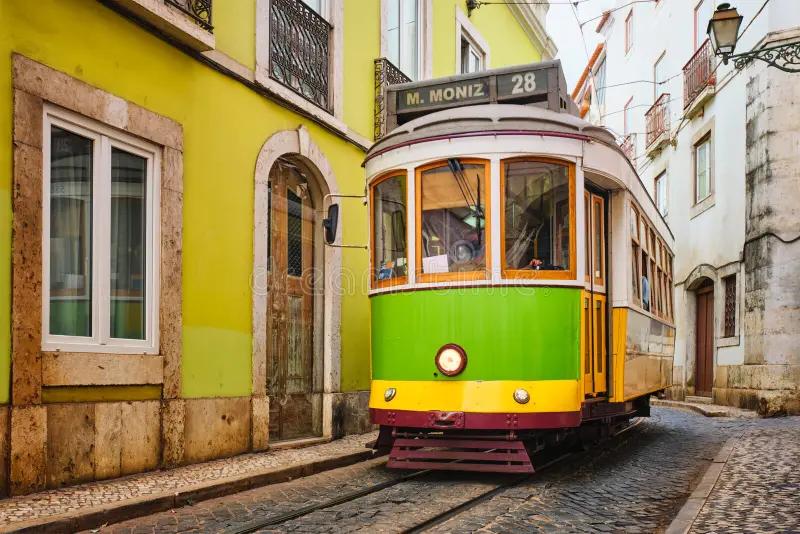
A walking tour lisbon guides you on foot through the tiled facades, miradouros, and cobbled lanes that connect the Alfama, Baixa, and Chiado districts. Led by local guides, these Lisbon old town tours trace the city's Moorish castle heights down to the Tagus riverfront, pausing at São Jorge lookouts and rattling tram 28 routes. Booking walking tour lisbon tickets in advance secures your spot with a small group and a storyteller who knows the neighborhood's hidden staircases.
Lisbon's Praca do Comercio was rebuilt on the rubble of a single morning: the earthquake of 1 November 1755 flattened the medieval royal palace that once stood here, and the Marques de Pombal replaced it with the largest riverside square in Europe. That decision to start again from nothing shapes everything a walking tour lisbon route touches today. The city is not one city but several stacked on a slope, and to cross it on foot is to read those layers in sequence. The square itself opens directly onto the Tagus, its arcaded wings framing a triumphal arch on the Rua Augusta and an equestrian statue of Dom Jose I at the centre. Behind it lies the Baixa Pombalina, the grid of straight streets Pombal's engineers laid out as one of the first seismically designed districts in the world, timber cages hidden inside the walls to absorb the next tremor. The geometry is deliberate, rational, almost defiant — a planner's answer to catastrophe. Walk east and the grid dissolves. Alfama, the oldest quarter, survived the earthquake because it sat on firmer rock, and its Moorish tangle of alleys, staircases and washing lines climbs toward the Castelo de Sao Jorge with no plan at all. Here the significance of a Lisbon walking tour becomes plain: the contrast between engineered order and inherited chaos is the story of the place, and it can only be understood at the pace of a footstep. Fado drifts from doorways, azulejo tiles cool the facades, and the miradouros — Santa Luzia, Portas do Sol — hand out the river views that postcards borrow. West of the centre, the ground rises again toward Chiado and Bairro Alto, literary districts of bookshops, cafes and the Convento do Carmo, whose roofless Gothic nave was left open to the sky as a permanent monument to 1755. The thread that binds these Lisbon landmarks is elevation: the seven hills that give the city its light and its punishing gradients in equal measure. Trams grind up the steepest of them, but the intimate detail — a carved lintel, a tiled saint, the smell of grilled sardines — rewards those who choose the good walking tour lisbon tours on foot. What matters most about exploring Lisbon this way is value. The streets, squares and viewpoints themselves cost nothing, so a self-guided passeio a pe lisboa carries no admission at all, while a walking tour lisbon tour with a licensed local guide converts the same free ground into context — names, dates, the meaning behind a doorway. Judged on price against depth of understanding, both hold up: the city gives its history freely, and a guide simply sharpens the focus for anyone willing to trade a modest fee for a sharper lens on the same open streets.
Lisbon is not one city but several stacked on a slope, and to cross it on foot is to read those layers in sequence.
Comfortable, breathable clothing suits Lisbon's summer heat, and flat, closed-toe walking shoes are essential once the route climbs from Praça do Comércio into the steep, uneven cobblestones of Alfama. A light layer helps for early starts, since river breezes off the Tagus can feel cool before 09:00 even in July.
Praça do Comércio itself has no bag checks or metal detectors since it is an open public square, but nearby paid sites such as the Rua Augusta Arch viewpoint operate their own entry screening. Keep bags zipped and worn in front through the busy Rua Augusta pedestrian strip, a known pickpocket area according to local police advisories.
Photography and filming are unrestricted across the square, the Cais das Colunas riverfront steps, and surrounding Baixa streets, since this is public land with no admission gate. Tripods are generally fine outside peak foot-traffic hours, though large rigs may need to yield space during market days or events.
The open square is safe and flat for strollers and young children, though the Alfama hill sections of a longer walking tour Lisbon itinerary can tire small kids quickly. Family logistics and pacing advice are covered in the dedicated family guide.
Praça do Comércio itself is flat, paved, and wheelchair accessible, with a step-free entrance from the Terreiro do Paço metro station on the Blue Line. The wider walking tour Lisbon route into Alfama and Chiado involves steep hills, staircases, and uneven cobblestones that are difficult for wheelchairs or limited-mobility visitors, so ask any guided operator about an accessible alternate route in advance.
Outdoor cafés and restaurants line the square's arcaded buildings, including the historic Martinho da Arcada dating to 1782, but bringing your own packed food and water onto the public square is permitted since there is no gate or bag check. Drinking alcohol is allowed at café terraces but discouraged from open containers while walking through pedestrian tour routes.
Public square, always accessible
Quietest weekday mornings
Busier by late afternoon
Heaviest tour-group traffic
Local market stalls sometimes set up
Open 24 hours, tour groups typically run 09:00–18:00
09:00 - 11:00 is the best arrival window for a walking tour Lisbon route, ahead of midday crowds;location
Public transport · 5-10 min from central stations · EUR 1.80 single Viva Viagem fare;Walk
Take the Blue Line metro to Terreiro do Paço station, which opens directly onto Praça do Comércio, or use the Green/Blue Baixa-Chiado station a short walk uphill.
Because the entrance fee is 0 EUR and Praça do Comércio is an open public square, there is no ticket to cancel or refund for self-guided visits. For any guided walking tour Lisbon operator booked separately, check that provider's own cancellation window, as terms vary by company.
Recommended time
3-4 hours
Budget 3 to 4 hours for the core Baixa-to-Alfama route on a self-paced walking tour lisbon route, including stops at viewpoints and a coffee break; add an hour if you climb to Castelo de Sao Jorge or linger over lunch. Trim to under two hours by sticking to the flat Baixa grid and skipping the Alfama stairs. There's no ticket queue for the streets and squares themselves, though the Santa Justa lift and castle can have short lines by mid-morning. Locals and other walking tour lisboa groups tend to cluster in Alfama's alleys from late morning onward, so front-loading Baixa first keeps the pace easy.
Crowd levels through the day
Weather · crowds · average price — dots go green to amber to red as each metric rises.
Mild 15-21°C days and thinner crowds make March through May comfortable for a walking tour Lisbon itinerary through Alfama's hills. Jacaranda and orange blossoms add color to the Baixa streets during this stretch.;Summer (Jun-Aug)
Begin any walking tour Lisbon itinerary at Terreiro do Paço station rather than starting uphill in Alfama, since descending the steep lanes at the end is easier on the knees.;Use a rechargeable transit card
Praca do Comercio, 1100-148 Lisbon, Portugal
Central spot near the King José I statue, close to Terreiro do Paço metro exit
Get directionsPraca do Comercio began as the Paco da Ribeira, the royal riverside palace begun under King Manuel I in 1511. For over two centuries Portuguese monarchs ruled from its halls beside the Tagus. The palace held the royal library and the Casa da India, the customs house that governed a global trade empire. On the morning of 1 November 1755, the Great Lisbon Earthquake struck. Three tremors, a tsunami, and fires reduced the palace and much of the lower city to rubble. Tens of thousands died. King Jose I never again lived indoors, and the ruined waterfront demanded a wholly new plan. The Marques de Pombal, the king's chief minister, directed the reconstruction. Engineers Manuel da Maia, Eugenio dos Santos, and Carlos Mardel imposed a rigid grid on the flattened Baixa. They pioneered the gaiola pombalina, a timber cage designed to flex during future quakes, an early seismic engineering feat. The old palace square was rebuilt as a symmetrical civic space, its arcades opening toward the river. A walking tour lisbon route through the Baixa reads this Enlightenment order in every straight street. The equestrian statue of Jose I, cast by Machado de Castro, was unveiled in 1775. In 1873 the Arco da Rua Augusta completed the northern edge. A guided walking tour lisbon tour extends beyond this planned grid into Alfama, the labyrinth that the earthquake largely spared. Alfama preserves its Moorish-era street pattern from before the 1147 Christian reconquest by Afonso Henriques. Its narrow lanes climb toward the Castelo de Sao Jorge, whose foundations predate the Moors. The contrast defines the city: Pombaline geometry below, medieval tangle above. Many walking tour lisbon tours pair the two. Free-entry access to these public squares means travelers rarely need walking tour lisbon tickets for the streets themselves. This layered survival, from Roman Olisipo through Islamic Al-Ushbuna to Pombaline design, is what a Lisbon landmarks walking route ultimately reveals.
Afonso Henriques captured Lisbon from Moorish rule, ending Al-Ushbuna.
King Manuel I began the Paco da Ribeira palace on the Tagus riverfront.
The Great Lisbon Earthquake, tsunami, and fires destroyed the palace and Baixa.
The Marques de Pombal launched the gridded Pombaline reconstruction plan.
Machado de Castro's equestrian statue of Jose I was unveiled in the square.
The Arco da Rua Augusta was completed on the square's northern side.
Stand under the ochre-yellow colonnade on the square's west side and frame the Arco da Rua Augusta and King José I statue through the arches; the low sun rakes directly along the arcade floor. This spot anchors most walking tour lisbon routes since it opens onto Rua Augusta itself.
Ride the elevator inside the arch, then climb a short staircase to the rooftop for a 360-degree view over the square's checkerboard paving, Rua Augusta, and the Tagus. A small entry fee applies separately from the free street-level walking tour lisbon tours cover.
Shoot straight down the mosaic-paved street toward the arch, using the black-and-white cobblestone pattern as a leading line; street performers and cafe awnings add foreground color.
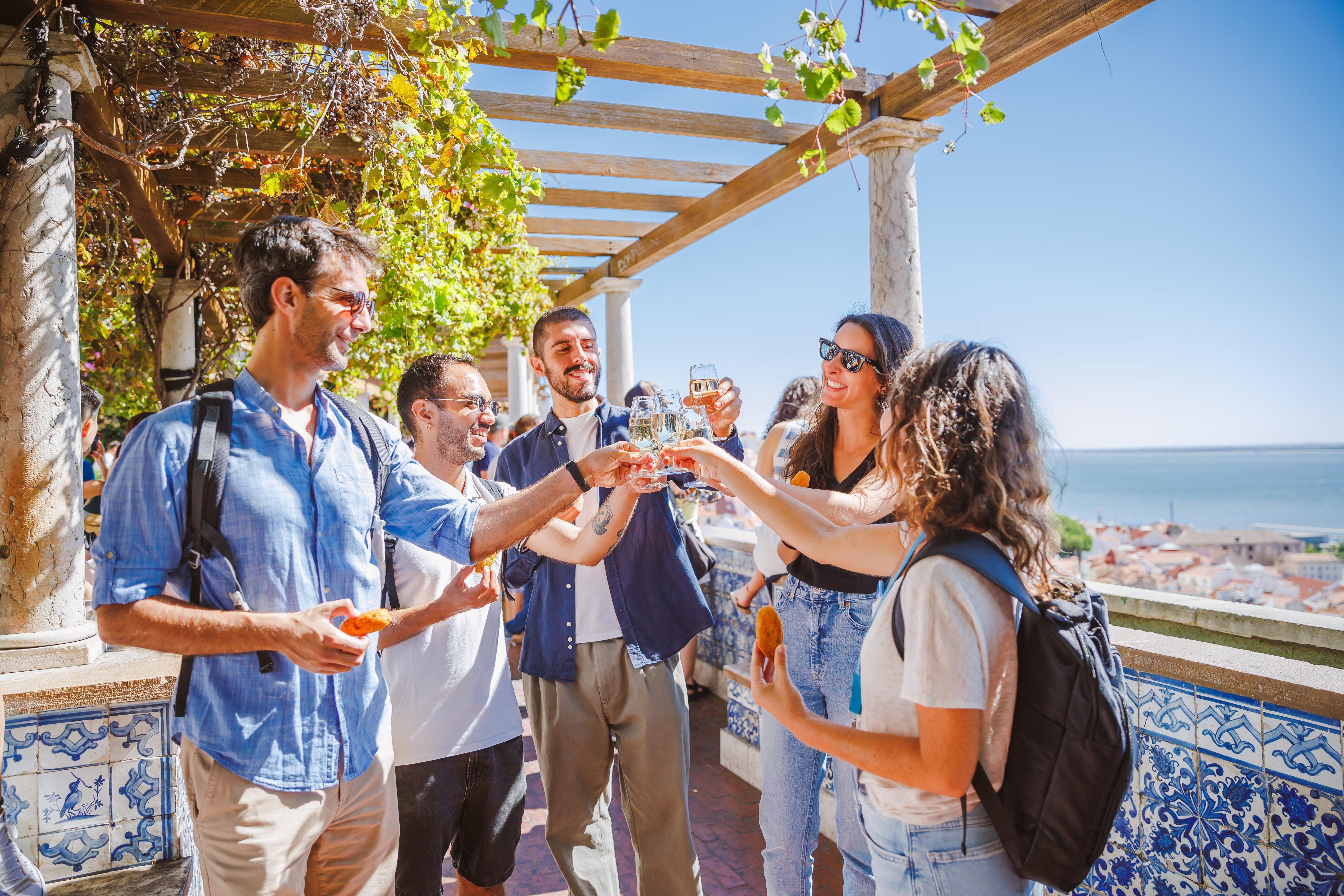
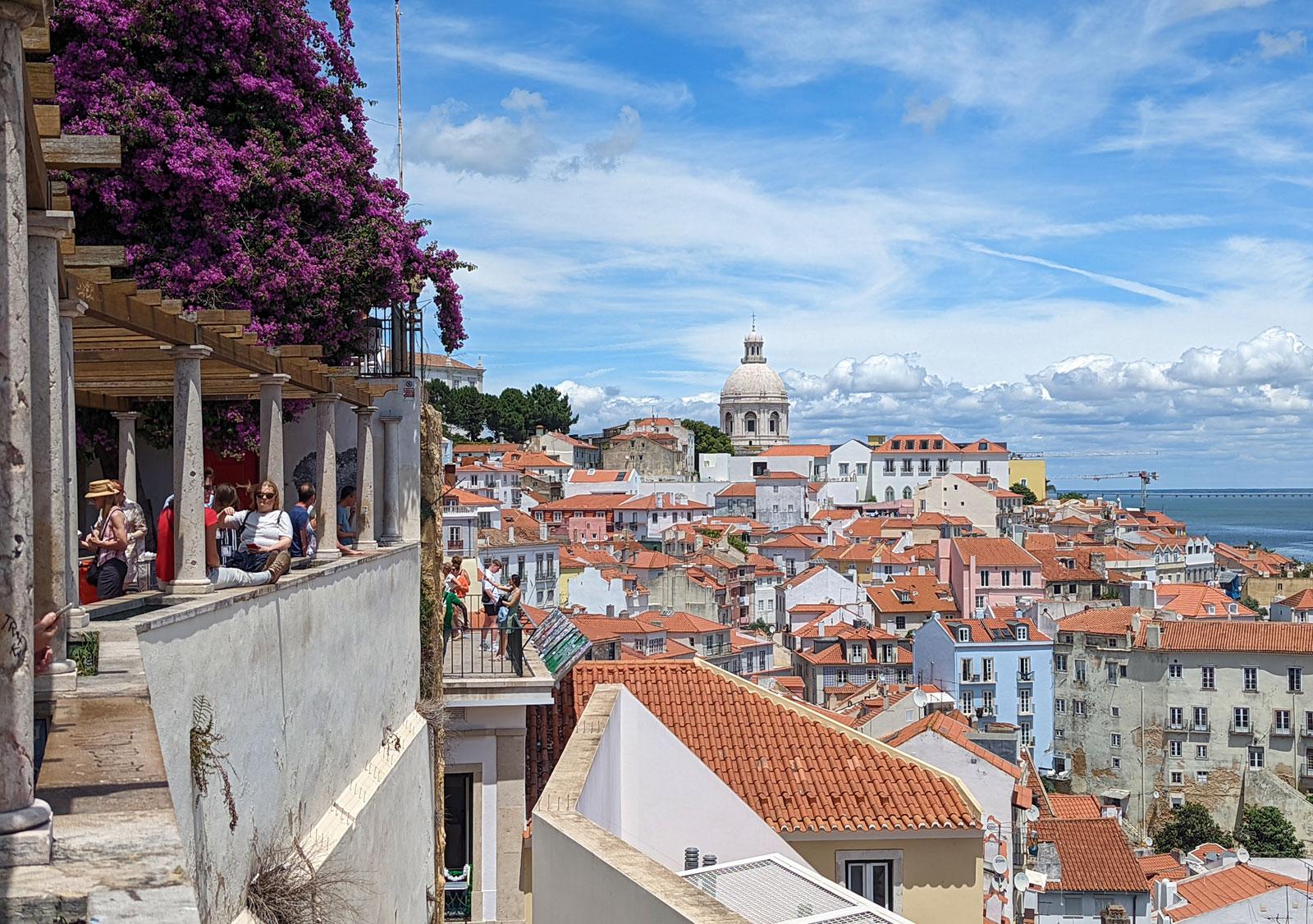
From the tiled, grapevine-covered pergola, frame Alfama's terracotta rooftops with the National Pantheon dome and Tagus River behind; the azulejo-lined wall makes a natural foreground on the left.
Walk to the balcony edge past the statue of St. Vincent for the widest open panorama of Alfama cascading toward the river, with São Vicente de Fora's twin towers on the skyline.
A walking tour lisbon route that starts at Praça do Comércio feels easy at first, then turns into a real workout once the Alfama hills and stairs begin, so pace kids accordingly. Families do it successfully every week, just with a flexible plan rather than a fixed itinerary.
Praça do Comércio and the riverside are flat and stroller-friendly, but wheels are impractical once you climb into Alfama's stepped alleys. A baby carrier is the better tool for the historic quarter, and bringing rugged all-terrain wheels helps if you still want to push through Baixa.
Toddlers and early-elementary kids manage well if you keep to the flatter squares and shorten the Alfama climb; children under two are easiest to carry rather than wheel.
Start on the flat ground around Praça do Comércio so kids warm up before the incline, then plan a rest every 20-25 minutes once the cobblestones and stairs begin. Benches and miradouro terraces along the way make natural stopping points.
Turn back at the base of Alfama's steepest lanes and loop through Baixa's grid streets instead of finishing the full Lisbon landmarks circuit; this keeps the outing to about an hour for tired legs.
Public toilets and baby-change points are limited on the route itself, so use cafés near Praça do Comércio before heading uphill.
Portuguese cobblestones get slippery when wet, so on rainy days stick to the flat riverside stretch near the square rather than the sloped Alfama alleys.
Praça do Comércio itself has no food stalls, but a walking tour lisbon route runs straight into Baixa's grid of cafés and pastelarias, then climbs into Alfama's tascas, so no one needs to bring their own snacks.
Order one warm custard tart and an espresso at the standing counter; watch bakers work behind the glass. Queues build after 11:00, so it suits an early stop on the route out of the square.
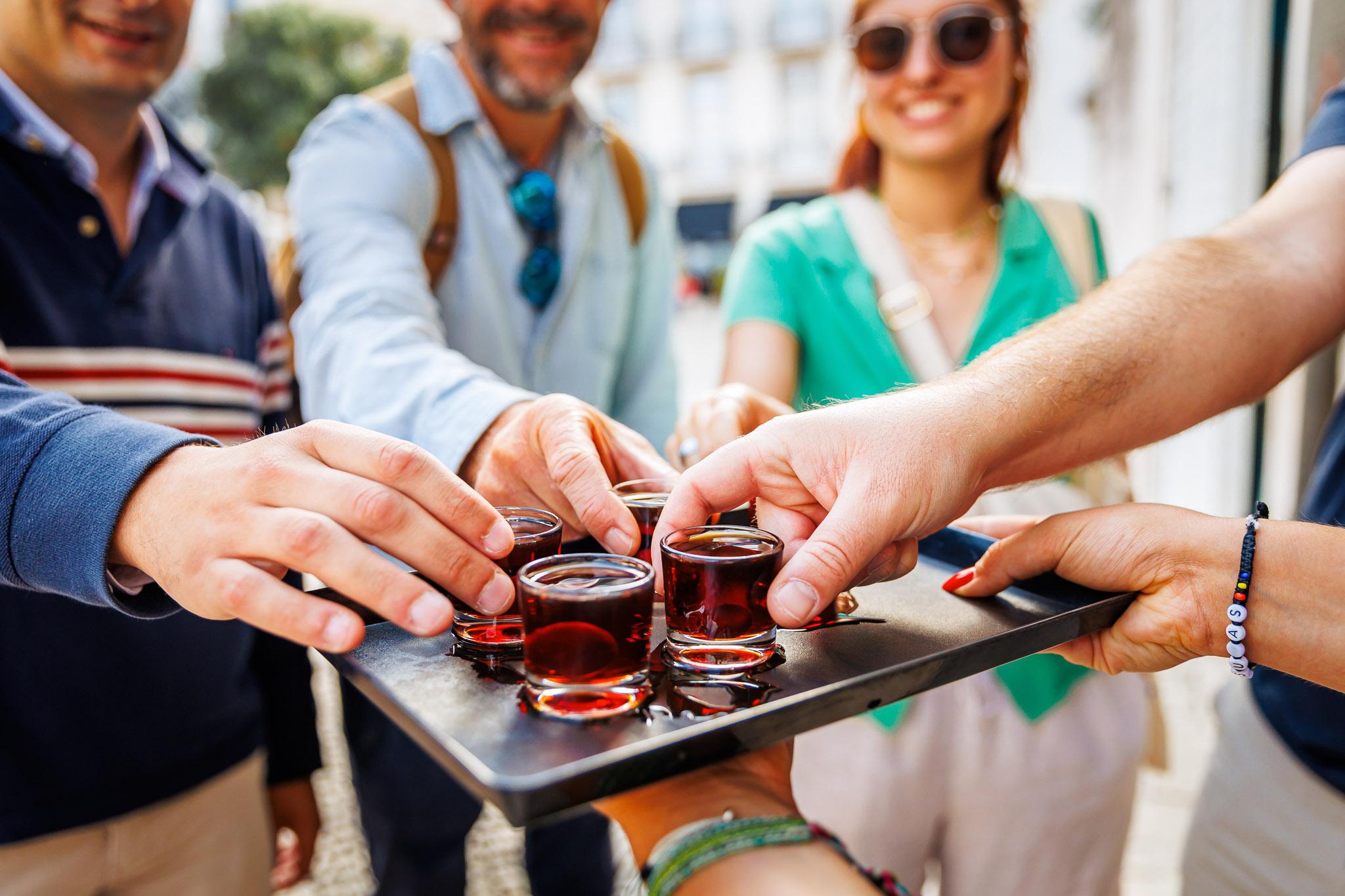
A single shot of ginjinha, with or without cherries, drunk standing at the counter near Rossio Square. Good for a quick, characterful pause rather than a sit-down meal.
A petiscos spot for shared plates like black rice with cuttlefish, a short walk from Casa dos Bicos. Fine for a mid-tour lunch break with table seating.
Mozambican-Portuguese dishes such as curries and matapa in a small, family-run room. Best for travelers extending the walk into Mouraria and wanting a sit-down meal off the main tourist path.
Real experiences from real travelers
Our guide grew up two streets from where we started, so the walking tour lisbon route felt like being shown around a neighbor's home. We wound through Alfama's laundry-strung alleys just after nine when the light was soft and the crowds thin. She pointed out fado bars and tiny grocers I never would have found alone.
As a local I joined to see my own city through fresh eyes and the guide's stories about the 1755 earthquake were sharp without being a lecture. The calçada was slick after morning rain so wear grippy shoes. Loved hearing Tram 28 clang past while we stood in a quiet miradouro.
This passeio a pé em Lisboa was our first morning in town and it oriented us perfectly for the rest of the trip. We climbed from Baixa up to the castle walls with plenty of pauses to catch our breath and photograph the river. The guide's Portuguese pronunciation tips actually stuck.
The Lisbon old town tour covers a lot of ground and the hills are no joke, so I was glad for the water breaks. Some of the viewpoint stops got crowded with other groups around midday. Still, the azulejo explanations and the walk through Mouraria made it worth the climb.
We booked the late afternoon walking tour lisbon slot and ended up at Portas do Sol as the sky turned orange over the Tagus. The guide balanced history with recommendations for dinner nearby. Comfortable pace, small group, and she waited patiently while everyone took photos.
I've done self-guided walks before but the context our guide gave about Lisbon landmarks made everything click. We started at Praça do Comércio and finished near the cathedral about three hours later. Bring layers because February mornings by the river are colder than you'd expect.
Light rain didn't ruin our walking tour lisbon tour, though the tiled steps in Alfama were properly slippery. The guide handed out a couple of umbrellas and kept spirits up with stories about the fado singers. A shorter route than advertised but nobody minded once we reached the miradouro.
Andando a pé por Lisboa with someone who knew every shortcut meant we skipped the tourist crush entirely. We wandered from Graça down through the old Moorish quarter as church bells rang. He even walked us to a tiny bakery for a pastel de nata mid-tour.
Only six of us on this walking tour lisbon tickets booking, which made it easy to ask questions as we climbed toward São Jorge. Midsummer sun was strong by late morning so a hat helped a lot. The guide's pacing suited both my teenage son and my mother.
The guide's knowledge of Lisbon landmarks and the old earthquake ruins kept me engaged the whole way. Just know that the route up from Baixa is genuinely steep and cobblestoned. We caught golden light over the rooftops near the end, which made the effort pay off.
Everything you need to know for your journey
Praça do Comércio and the surrounding streets are open 24 hours daily, since this is a public square with no gate, though most guided walking tour Lisbon departures run between 09:00 and 18:00.
Entry is free, at 0 EUR, because the walking tour lisbon route covers public streets and squares rather than a ticketed venue.
Praça do Comércio itself is flat and step-free from the Terreiro do Paço metro exit, but the Alfama and Chiado sections of a full walking tour lisbon tour involve steep hills and stairs that are difficult for wheelchairs.
There are no bag checks on the open square itself, though nearby paid sites like the Rua Augusta Arch viewpoint run their own screening, and visitors should keep bags zipped through crowded Rua Augusta.
Photography is unrestricted across the square and public streets that make up the walking tour lisbon tours route, since it is open public land with no admission control.
Arriving between 09:00 and 11:00 offers cooler temperatures and fewer tour groups before the midday rush on the walking tour lisbon route.
Comfortable closed-toe walking shoes and breathable layers work best, since the route moves from a flat riverside square into the steep cobblestones of Alfama.
Bringing your own food and water onto the public square is fine, and café terraces along the arcades also offer dining, but consumption is discouraged mid-walk on narrower pedestrian stretches.
The Blue Line metro stops directly at Terreiro do Paço station on the square, and Baixa-Chiado station on the Blue and Green lines is a short walk uphill for those continuing the route.
Yes, the flat square section suits strollers and young children, though the hillier Alfama stretch of a longer walking tour lisbon itinerary can be tiring for small kids.
Because the square itself carries no ticket cost, there is nothing to cancel for a self-guided visit; any separately booked guided operator sets its own refund window, commonly 24 hours before departure.
The route naturally connects to the Rua Augusta Arch, Santa Justa Lift, Lisbon Cathedral, Rossio Square, Carmo Convent ruins, and São Jorge Castle, all within a 15-minute walk.
A triumphal arch completed in 1875 with an interior elevator and rooftop viewpoint over the square and river. Separate paid access applies for the terrace, distinct from the free public square below.
Central budget-to-mid-range hotels and guesthouses within easy walking distance of the square, close to Rossio and Rua Augusta.
Join thousands of happy travelers who have discovered this incredible experience
Book Your Experience Now